
Open Letter to Steve Jobs

update 16:00: Steve Jobs answers to my open letter, see below.
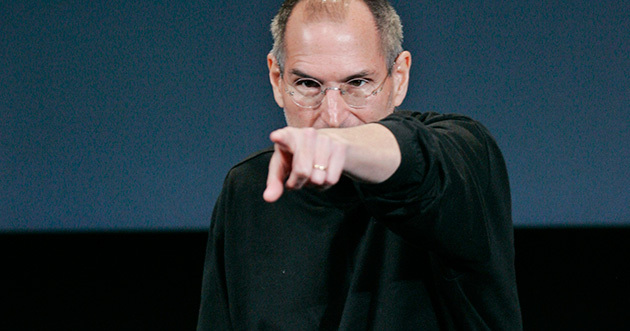
Steve Jobs pointing his finger

That's rude!

Dear Steve Jobs,

Having read your Thoughts on Flash, I could not agree with you more. Flash is not the Web, and I am glad Apple seizes the opportunity of open standards to build better products for their customers.

But I am not so sure about your definition of the word Open in general. I will not argue here that it is ironic you find the Apple Store more open than Flash. I will not complain either that you like Openness so much that when you use “Open Source” Software to build your Mac operating system, you keep all the openness for yourself and don’t give it to your customers, nor to the developers whose works have been very useful to you.

I figured that writing an open letter was an appropriate way to remind you of a couple of things that you may have forgotten — maybe in good faith — about open standards.

It is true that HTML5 is an emerging open standard, and I am glad that you adopted it (well, did you really have the choice anyway?). However I have to say I am impressed in the way you succeed in saying how Apple has been doing great with open standards against Flash… while explaining Flash videos is not a problem, because Apple has implemented another video codec: H.264.

May I remind you that H.264 is not an open standard? This video codec is covered by patents, and “vendors and commercial users of products which make use of H.264/AVC are expected to pay patent licensing royalties for the patented technology” (ref). This is why Mozilla Firefox and Opera have not adopted this video codec for their HTML5 implementation, and decided to chose Theora as a sustainable and open alternative.

Free Software Foundation Europe have been raising consensus and awareness on Open Standards for some years already. I am sure we would be happy to help Apple make the good decision. So, to begin with, here is the definition:

An Open Standard refers to a format or protocol that is

  1. subject to full public assessment and use without constraints in a manner equally available to all parties;
  2. without any components or extensions that have dependencies on formats or protocols that do not meet the definition of an Open Standard themselves;
  3. free from legal or technical clauses that limit its utilisation by any party or in any business model;
  4. managed and further developed independently of any single vendor in a process open to the equal participation of competitors and third parties;
  5. available in multiple complete implementations by competing vendors, or as a complete implementation equally available to all parties.

Hugo Roy
April 2010


Steve Jobs’ email (with sources)

From: Steve Jobs
To: Hugo Roy
Subject: Re:Open letter to Steve Jobs: Thoughts on Flash
Date 30/04/2010 15:21:17

All video codecs are covered by patents. A patent pool is being assembled to go after Theora and other “open source” codecs now. Unfortunately, just because something is open source, it doesn’t mean or guarantee that it doesn’t infringe on others patents. An open standard is different from being royalty free or open source.

Sent from my iPad

Since it was an open letter, I think I have the right to publish his answer.

141 thoughts on “Open Letter to Steve Jobs

  1. Pingback: Steve Jobs responde al uso de H.264 vs Theora

  2. The company now driving web video is Google. They paid $100m to liberate V8 by buying ON2 and open sourcing the intellectual property.

  3. You do realize that h264 fits the definition of open you posted to the letter … right?

    Answer by Hugo: It does not fits the definition. I have been working on Open Standards and the FSFE is raisong consensus on them since 2004… we know what we are talking about. Read again.

  4. Two things:
    1) The comments seem to have become a little lost. Doesn’t Mr. Roy, in effect, ask the question about comparing the Apple App store to Adobe’s FLASH? How is this comparing apples to apples? Mr. Jobs make the comparison between web applications for the iPhone/iPad/etc. to FLASH applications and contends that web applications using HTML5, CSS, and JavaScript use open STANDARDS while Adobe’s FLASH using closed STANDARDS. The only time Mr. Jobs mentions “open source” is to refer to WebKit; not to FLASH.

    Mr. Jobs asserts six things:
    – Adobe plays fast and loose when describing FLASH as an “open standard” development platform
    – Adobe’s claim that the web is 75% FLASH video is an exaggeration
    – there are some questions regarding “security” when using a FLASH plug-in
    – Apple has asked Adobe to demonstrate responsible power use by FLASH and Adobe has failed to deliver…. so far
    – most FLASH “on the web” does not handle a touch interface well and needs to be rewritten
    – Apple is wary of tying the progress of innovation within applications running on their products to any party unwilling to innovate in a timely manner; hence the reference to the 10 year wait for Adobe to release a version of their CS which is fully native to OS X.

    Why is this discussion mired in talk of “open source”? None of Mr. Jobs points about Adobe or FLASH talk of “open source” only “open standards”. They are not the same thing.

    2) when did “available in multiple complete implementations by competing vendors” become part of open source? Why must there be a component of competition for an open source project to be called “open source”?

    Answer by Hugo: Well, it’s not me who got lost… I am not talking about Open Source but about Open Standards, which Jobs claimed he likes against Flash. So I wanted to say: beautiful, you like open standards. But H264 is not an open standard.

  5. Nice of him to reply.

    I think if the web takes something as an open standard, patents go out of the window really, i.e. jpg

  6. Hugo said, “I have no idea what he is talking about when he says “an open standard is different from open source.”

    Really? It’s not difficult to understand. For the former, you can get it from a multitude of vendors and various price points and it’s widely used. For the latter, you can get it potentially from anyone for any price, even free, and it’s not widely used.

    ************************************************

    Jobs’ mistake however, was in characterizing the H.264 codec as “format,” to be compared against Flash, i.e. in common parlance a container like AVI or FLV. But given that you can create a Flash video with H.264, H.264 was irrelevant to his argument. Better to trumpet MP4′s strengths vs. FLV if that’s what he meant to do.

    Answer by Hugo: Software & standards are two completely different things. I mean, it’s like comparing bananas to cars. Does it make sense if I say “Banans are different from cars”?

  7. “Why is this discussion mired in talk of “open source”? None of Mr. Jobs points about Adobe or FLASH talk of “open source” only “open standards”. They are not the same thing.

    2) when did “available in multiple complete implementations by competing vendors” become part of open source? Why must there be a component of competition for an open source project to be called “open source”?”

    Bingo. The open source community felt left out, and confusing open standard with open source, that’s why. Defensive without even being targeted. Lack of self esteem? Needing validation?

  8. @Dave, etc.: Why are you confusing the term “open standard” with the term “standard”?

    Possibly because these terms don’t have a definite meaning until we’re feeling frisky enough to give them one.

  9. Err, you do realize that Flash has been open for the past 2 years, right? Take a look at the Open Screen Project. You can now find 3rd party flash players.

    People really need to stop listening to Jobs and start thinking for themselves.

  10. I see free software advocators make this mistake all the time, and it’s not even funny anymore. Pay close attention to the next line :

    OPEN STANDARD ≠ NON-POPRIETARY

    Answer by Hugo: What do you mean by “non properietary”. It’s not about software here. Open standards are not “non proprietary” or whatever, they are open standards. See the definition

    In fact, it should strike you that H.264 does indeed match the FSF definition of open standard given in this open letter. An open standard means that it is non-discrimatively offered to anyone who matches the criteria of attribution. In fact, a large number of open standards are proprietary. DVD and Blu-ray are both open and proprietary, because any vendor is welcome to build their own player, as long as they pay the fee to their respective owners.

    So while H.264 is an open standard, Flash, on the other hand isn’t, since Adobe, and Adobe only, can distribute a Flash Player.

    Answer by Hugo: H.264 is not an open standard because commercial users and vendors have to pay a patent tax on each copy of their implementation. That is not compatible with the definition of an open standard. Again, “RAND” terms are not open standards, they are “RAND terms” standards. Read the definition.

  11. @ OpenFlash : that simply isn’t true. Please look at the FAQ of the Open Screen Project:

    Does this mean that it is possible for companies or developers to distribute Flash Player within their product offerings?<br/
    Adobe has removed the restrictions on the SWF and FLV/F4V specifications, not on Flash Player itself. Future versions starting with the next major versions of Flash Player and AIR for devices are royalty free as part of the Open Screen Project. However, a license (contract) still needs to be in place between Adobe and the licensee.

  12. Answer by Hugo: What do you mean by “non properietary”. It’s not about software here. Open standards are not “non proprietary” or whatever, they are open standards. See the definition

    By non-proprietary, I mean… non-proprietary. Property has nothing to do with software or hardware, it only means that someone owns it. Again, read the definition yourself, and see how it never mentions that it should be “free” (as in free speech) or that no one should own it. An open standard can, and often is, proprietary. You really need to wrap your mind around that notion. So, again :
    OPEN STANDARD ≠ NON-PROPRIETARY

    Answer by Hugo: H.264 is not an open standard because commercial users and vendors have to pay a patent tax on each copy of their implementation. That is not compatible with the definition of an open standard. Again, “RAND” terms are not open standards, they are “RAND terms” standards. Read the definition.

    where exactly do you see in the definition that open standards shouldn’t be submitted to patent taxes on each of their implementations, exactly?? Do you even understand the definition?

  13. By non-proprietary, I mean… non-proprietary. Property has nothing to do with software or hardware, it only means that someone owns it. Again, read the definition yourself, and see how it never mentions that it should be “free” (as in free speech) or that no one should own it. An open standard can, and often is, proprietary. You really need to wrap your mind around that notion. So, again :
    OPEN STANDARD ≠ NON-PROPRIETARY

    > 4. managed and further developed independently of any single vendor in a process open to the equal participation of competitors and third parties

    No one “owns” the standard. Take ODF as an example: it is managed by OASIS.

    where exactly do you see in the definition that open standards shouldn’t be submitted to patent taxes on each of their implementations, exactly?? Do you even understand the definition?

    Can you read?!

    An Open Standard refers to a format or protocol that is

    1. subject to full public assessment and use without constraints in a manner equally available to all parties;
    2. without any components or extensions that have dependencies on formats or protocols that do not meet the definition of an Open Standard themselves;
    3. free from legal or technical clauses that limit its utilisation by any party or in any business model;
    4. managed and further developed independently of any single vendor in a process open to the equal participation of competitors and third parties;
    5. available in multiple complete implementations by competing vendors, or as a complete implementation equally available to all parties.

    1. “use without constraints”
    3. “free from legal… clauses that limit its utilisation by any party”

    For more information, http://fsfe.org/projects/os/os.en.html

    Note that FSFE is recognized as a relevant organisation on the matter. Our founding president got the German cross of merit for his work on Free Software and open standards. The definition of open standards has been given by the European Commission in its EIF (2003).

  14. Answer by Hugo : Note that I never said open standards are necessarily royalty-free. Moreover, I have no idea what he is talking about when he says “an open standard is different from open source.” Standards aren’t software.

    So you do acknowledge that open standards can be bound with royalty fees.

    answer by hugo: No I never said that. I said that open standards are not necessarily royalty-free, because you can have a one-time nominal fee (like with the Samba PFIF agreement with Microsoft) — this is not the same licensing scheme as in H.264 which is a “fee per copy” scheme > that’s not open standard compliant. Otherwise all open standards are royalty-free.

    Which is the case of DVD, Blu-ray, and H.264. So what is there in these open standards that make you deem them not worthy of the open standard title exactly? Also, you seem to misunderstand terms, when you said “standards aren’t software” as a reply to “an open standard is different from open source”. Do you realize there is open source hardware too? What Jobs meant is that there are proprietary open standards just as there are non-proprietary open standards. The main argument against H.264 that both the FSF and the Mozilla Foundation have is that it’s proprietary, not that it’s not an open standard.

    answer by hugo: No. Read what Mozilla says about it. It’s because it’s not an open standard.

  15. > 4. managed and further developed independently of any single vendor in a process open to the equal participation of competitors and third parties
    No one “owns” the standard. Take ODF as an example: it is managed by OASIS.

    er, yes, someone owns the standard… it only means that the open standard can’t be managed and developed independently of a single vendor. So it can be managed and developed by SEVERAL vendors. As in… A CONSORTIUM… as in… the organisms that regulate, manage and develop open standards such as DVD (DVD Forum), Blu-ray (Blu-ray Disc Association), or H.264 (MPEG-LA). Anyone who’s willing to participate in the open standard is welcome to do so, because that’s what open standards are about.

    answer by hugo: your definition of “own” and “proprietary” is funny.

    1. “use without constraints”
    3. “free from legal… clauses that limit its utilisation by any party”

    Without constraints ≠  without compensation. Once you get the license of an open standard, you are free to use it as you see fit without constraints. Free from legal clauses that limit its utilisation : likewise, this doesn’t mean that there shouldn’t be a license.

    answer by hugo: Where did I say there should not be a license? Of course there is a license. I said there should not be a patent fee license. Because that is a “constraint”. (That’s not my opinion. I work on that subject. I know what I am talking about, the definition I am using is the same used in the European Commission, in the W3C and other bodies who have to deal with standards.)

    You acknowledged yourself that an open standard could be bound to royalty fees, anyway. I don’t quite get how that makes H.264 any different.

    answer by hugo: No I never said that. I said that open standards are not necessarily royalty-free, because you can have a one-time nominal fee (like with the Samba PFIF agreement with Microsoft) but otherwise all open standards are royalty-free.

  16. Why is it so hard to understand that a companies like Apple don’t give a ratsass about if the tech is within your interpretation of the term “open standard”? if they sell it as open standard it will fit their interpretation. On top of that, the tech that you call “open standard” ogg in this case, will have to face future patent claims. It really doesn’t matter if these are rightful claims or not, there mere fact that it now already is discussed is reason enough to be very skeptical on wether on not to use the tech. For a company to hang it’s Billion dollar business model, it will need securities. A big association like MPEG-LA will and can help, defending against patent claims where as ogg will be just a big bag of hurt..

    answer by hugo: That’s not “my interpretation” of an open standard. It is the widely recognized definition of open standards for software, as used by Mozilla, the W3C, the European Commission, etc etc etc

  17. To sum up this vocabulary battle : Jobs never said that H.264 wasn’t proprietary. It clearly is. You are free to have issues with proprietary standards (as it is the case of the FSF and Mozilla foundation when it comes to internet standards). But the point of Jobs here is : Flash is BOTH proprietary AND a CLOSED standard. H.264 is proprietary AND an open standard. The latter sounds better. You’re making it a case for H.264 vs. Ogg Theora, let me remind you that, beyond the patents, there are industrial issues with Ogg Theora which make it impossible to endorse for Apple. So you’re using Jobs’ argument in something that has nothing to do with the issue at hand.

    answer by hugo: See all my answers. Please stop repeating the arguments I already answered to. If you want, write a blog entry and make a trackback link.

  18. answer by hugo: your definition of “own” and “proprietary” is funny.

    And your argument is short.

    answer by hugo: Where did I say there should not be a license? Of course there is a license. I said there should not be a patent fee license. Because that is a “constraint”. (That’s not my opinion. I work on that subject. I know what I am talking about, the definition I am using is the same used in the European Commission, in the W3C and other bodies who have to deal with standards.)

    The royalty is a constraint to access the licence, not to use the standard once you got the licence. And I find it frightening that you would work on the subject, seeing how bad you understand these notions… You might want to take counseling from a lawyer specialized in intellectual property.

    answer by hugo: No I never said that. I said that open standards are not necessarily royalty-free, because you can have a one-time nominal fee (like with the Samba PFIF agreement with Microsoft) but otherwise all open standards are royalty-free.

    Again, how can you pay a royalty fee if no one owns the standard? Royalties are exclusively meant for intellectual property. As in property. As in someone owns it. Dude, seriously, if you “work” on the subject (professionally) you ought to document yourself better.

  19. answer by hugo: No. Read what Mozilla says about it. It’s because it’s not an open standard.

    That simply isn’t true. Please back up your claim with a quote.

    Answer by Hugo: Use your favourite search engine, you will find more than a quote.

  20. The royalty is a constraint to access the licence, not to use the standard once you got the licence

    In other words, a constraint on who can use the standard.

    Again, how can you pay a royalty fee if no one owns the standard?

    Because having an openly defined standard is different from companies and groups that claim to have patents that cover said standard and demand you pay a fee.

  21. In other words, a constraint on who can use the standard.

    Yes, and not on HOW you can use it, as the wording of the definition specifies it.

    Because having an openly defined standard is different from companies and groups that claim to have patents that cover said standard and demand you pay a fee.

    This is clearly a gratuitous assertion. That isn’t specified anywhere in the definition.

  22. If you cannot grasp the difference between definition and interpretation that there is no use having this argument, since my interpretation is clearly different than that of yours although we are reading the same piece ;-)

    Answer by Hugo: I am not making any interpretation of the definition.

    I do have to second Nonoche in that at best you clearly seem to be suffering from some serious case of tunnel-vision, and at worst just don’t grasp the concept of an open standard..

    Answer by Hugo: Yes sure. And the whole Free Software Foundation Europe don’t get it either. This is just why this happened: http://fsfe.org/news/2010/news-20100428-01.en.html

    Just hypothetical, if one of the patent claims against Ogg will stick, will you be ready to drop it in favor of the next thing?, as at that time it will not fit your narrow view of what is an open standard anymore right?

    Answer by Hugo: No. Legal threats and lawsuits are another subject. And if other standards for videos fit the definition of open standards, I would be ready to adopt them as well.

  23. Yes, and not on HOW you can use it, as the wording of the definition specifies it.

    This is clearly a gratuitous assertion. That isn’t specified anywhere in the definition.

    Once again: The royalty is in itself a restriction on whether any party can use it.

    Both cases are clearly covered

    subject to full public assessment and use without constraints in a manner equally available to all parties;

    free from legal or technical clauses that limit its utilisation by any party or in any business model;

    I honestly do not see how you can possibly argue otherwise.

  24. Answer by Hugo: Use your favourite search engine, you will find more than a quote.

    This is way too easy young man. I cannot prove the inexistance of something, but you can prove me wrong easily. Please come up with a quote and a link (since it apparently only takes a seach in your favorite search engine) and bring it forward for us to contemplate, otherwise admit that your claim is just frivolous.

    Answer by Hugo: Yesterday: http://news.cnet.com/8301-30684_3-20003895-265.html Updated 2:33 p.m.: Mozilla issued the following statement: “We believe that it is in the public interest for HTML5 video to be backed by multiple, open and royalty-free codecs available in a way that is consistent with the W3C license standards. We would absolutely consider H.264 if MPEG LA would make it available under open web terms as defined by the W3C standards. We stand by our position on Theora.” W3C license standards are open standards : not H.264. Clear?!

  25. @RyanT : the royalty is equally applied to all parties who wish to use the standard. That matches the definition. Also, Hugo himself admitted that open standards could be bound to royalties (and has failed so far to answer the incoherence there is between non-proprietary standards and royalties). You might want to take into account full sentences here :

    subject to full public assessment and use without constraints in a manner equally available to all parties;
    free from legal or technical clauses that limit its utilisation by any party or in any business model;

    That only means that you cannot discriminate a party wishing to use the software just because you don’t want them to use it. Open standards, proprietary or not, are meant to be used by anyone who wants to, as long as they match the admission criteria that are fairly and equally applied to any licensee.

  26. Nonoche, your basic problem is that you don’t understand the words in the sentances. So here is another definition, the one in the EIF — that says basically the same thing but maybe this one you will understand.

    To attain interoperability in the context of
    pan-European eGovernment services, guidance
    needs to focus on open standards17.
    The following are the minimal characteristics
    that a specification and its attendant documents
    must have in order to be considered an open
    standard:
    - The standard is adopted and will be
    maintained by a not-for-profit organisation,
    and its ongoing development occurs on the
    basis of an open decision-making procedure
    available to all interested parties (consensus
    or majority decision etc.).
    - The standard has been published and the
    standard specification document is available
    either freely or at a nominal charge. It must
    be permissible to all to copy, distribute and
    use it for no fee or at a nominal fee.
    - The intellectual property – i.e. patents
    possibly present – of (parts of) the standard
    is made irrevocably available on a royalty-
    free basis.

    Note that when I say royalty, I am talking nominal one-time royalty like in Samba & Microsoft PFIF Agreement.

  27. @Nonoche
    I believe the idea is that the royalties can not effectively prevent a differing business or development model, such as FOSS. The PFIF agreement mentioned does seem rather complex, but I think the important issue is that it allowed FOSS redistribution to occur.

    Correct me if I’m wrong, Hugo, but I think I have an explanation for this. If Mozilla were to pay a flat fee that not only allowed Mozilla to distribute it, but also allowed individuals, distros, and whatever other relevant groups to redistribute Firefox without having to license with MPEG-LA themselves, then it could be considered an open standard.

    Answer by hugo: Basically yes.

    Also, I must say I find it amusing that the definition of an open standard is not that well standardized.

    Answer by Hugo: That is part of the effort of what we are doing at the FSFE. But of course, that’s not in the interest of Apple, which is why they like to spread this non-sense about open standards.

  28. Would SJ make such a stupid grammar mistake “others patents”? Ttttttt!

  29. some key words here and there. From your EIF definition :

    - The intellectual property – i.e. patents possibly present – of (parts of) the standard is made irrevocably available on a royalty-free basis.

    I believe this demonstrates that open standards can indeed be proprietary, complete with intellectual property and patents. So once again, and altogether now : OPEN STANDARDS ≠ NON-PROPRIETARY.

    Answer by Hugo: Do you understand “made irrevocably available” and “royalty-free basis”? If you give up your “property” on the standard: then how can the standard by proprietary?!

    Now, from the wikipedia definition :

    The terms “open” and “standard” have a wide range of meanings associated with their usage. There are number of definitions of open standards which emphasise different aspects of openness, including of the resulting specification, the openness of the drafting process, and the ownership of rights in the standard. The term “standard” is sometimes restricted to technologies approved by formalized committees that are open to participation by all interested parties and operate on a consensus basis.

    Answer by Hugo Again, we’re talking software standards here. Not telecommunications stanards (as in the ITU) or all the standards defined by ISO. If you look at software standards, you have varios licensing bodies. Theses licensing bodies (e.g. W3C) have a definition of standard that they qualify has being “open standard” it does not mean it is the definition of open standard, it just means that it fits in the category of open standards (which definition is given by us, or also by the European Commission’s EIF).

    To make it simple: [Open Standards [W3C standards]]

    It should be noted that various embodiments have differing definitions of open standards. While you’re free to give your preference to such or such definition and hand pick the one that suits you the best,

    Answer by Hugo Again, it is widely accepted in the context of software that the definition of open standard is the one I am refering to. And in this definition, H264 is not an open standard. What the hell do you not understand there? Please find me an example where the people behind MPEG LA or H264 claim H264 to be an open standard — then compare the definitions.

    it doesn’t make other ones wrong for all that. By industry standards (no pun intended), open standards can be, and often are, not only proprietary, but also bound to various fees and conditions. The emphasis that Steve Jobs puts on open standards is by opposition to Flash, which isn’t open at all by any definition (only Adobe can make a Flash Player and decide who gets to distribute it, as it is stated in the Open Screen Project FAQ).

    Answer by Hugo Yes. And I say, HTML5 may be an open standard, but H264 is not. So Steve Jobs post is pure manipulation.

    Answer by Hugo: Yesterday: http://news.cnet.com/8301-30684_3-20003895-265.html Updated 2:33 p.m.: Mozilla issued the following statement: “We believe that it is in the public interest for HTML5 video to be backed by multiple, open and royalty-free codecs available in a way that is consistent with the W3C license standards. We would absolutely consider H.264 if MPEG LA would make it available under open web terms as defined by the W3C standards. We stand by our position on Theora.” W3C license standards are open standards : not H.264. Clear?!

    I fail to see where the Mozilla foundation states that H.264 isn’t an open standard. What they say is that it’s not compliant with the W3C standards, which YOU label as the definition for open standards.

    Answer by Hugo No. It’s the W3C that says it is open standards : http://www.w3.org/2005/09/dd-osd.html

  30. Answer by Hugo: Do you understand “made irrevocably available” and “royalty-free basis”? If you give up your “property” on the standard: then how can the standard by proprietary?!

    That’s where you fail to understand intellectual property. Giving away a perpetual license does not equal abandoning your intellectual rights and property (particularly not in France, by the way).

    Answer by Hugo We are talking property over the standard, not over the patent. If there is “giving away a perpetual license” on the standard, then it means you don’t own the standard, no matter how much you own the patent covered by the standard.

    You really should document yourself on the matter.

    Answer by Hugo Yes sure. Now considering what you wrote on http://www.macgeneration.com/news/voir/140991/mozilla-face-au-probleme-h.264 it is easy to see you fail to understand completely how it works. I quote

    des algorithmes très pointus, qui sont en général en dehors de portée du logiciel libre.

    Hugo: which is completely bullshit and just shows your complete lack of understanding of how free software works anyway.

    Answer by Hugo Again, we’re talking software standards here. Not telecommunications stanards (as in the ITU) or all the standards defined by ISO. If you look at software standards, you have varios licensing bodies. Theses licensing bodies (e.g. W3C) have a definition of standard that they qualify has being “open standard” it does not mean it is the definition of open standard, it just means that it fits in the category of open standards (which definition is given by us, or also by the European Commission’s EIF).

    We’re not talking about software standards at all. We’re talking about format standards. You ought to know that there are hardware decoders for H.264 (hardware decoders which, by the way, Ogg Theora cruelly lacks). We can agree that your definition of open standards differs from what the industry at large calls open standards.

    Hugo: Not in the software industry.

    I wonder how you would differ standards that are open to competitors (like H.264 is) from standards that simply aren’t (like Flash is).

    Hugo: Flash is just a de facto standard. H264 is a RAND-terms patented standard.

  31. @Nonoche: I can only assume you either don’t understand the English in the links that well or you’re trolling. Because if anyone was confused like you and just read all the previous comments and links then they’d understand what Hugo was trying to say.

  32. After reading the letters and the back and forth on the replies, I think it would be a great idea for the FSF and Groklaw to join forces and start the documentation process for Ogg Vorbis and Theora in anticipation of the eventual lawsuit. They are entities which are great at this and have the requisite expertise..

    Tom

  33. Wow hugo, you are a real dick. I won’t be returning to your blog again.

  34. Nice blog post! I like that you take the time to comment on everyone’s thoughts. Many times I’ll read an article and simply get blown away by comments. There is a ridiculous amount of utter crap posted by uninformed and malicious bastards. Your article and comments rock, keep the rabble in line. Thanks!

  35. The FSFE’s fight for free access to open standards is laudable but I’m wondering whether some of its past efforts were more focused on action against a particular vendor than on tackling the actual problem. The FSFE was a complainant in the European Commission’s antitrust investigation against Microsoft. Now there is, theoretically, a Windows version without the Media Player. No one buys it because its price is the same as that of the version that includes the Media Player; Microsoft just has to offer it for formal reasons. Even if the Media Player were separated more effectively (for which there’s no initiative going on and it might not even be legally possible), the real problem for multimedia codecs are patents on formats/standards. That antitrust case also had another component (network protocols), but at least the part related to the Media Player seems to have been waste of time, money and energy because there really isn’t any additional competition in multimedia now than if the antitrust investigation had never taken place.

  36. Hugo,

    Please keep up the good work. We need more people and more websites to educate people on these issues. I think the FSF groups should gather together an start an initiative to document and inform the public of these topics.

  37. So Steve Jobs was seduced by the dark side after all. Now Apple is not different from Microsoft.

  38. It would be worthwhile if all those corresponding in favour of Steve job’s definition to check with authorities like the Software Freedom Law Center, in NYC who can answer – technically, and legally what would constitute a coherent, layman-ese definition of “Open Standards”, which I am confident will correspond quite closely with that of this blog.

    Rabid defense or support of anything Apple (or Microsoft for that matter) without any accredited expertise in technology or technology law makes fools of fan boys.

    W. Anderson

  39. @Hugo

    The problem is that there is no official and validated definition of Open Standard and there is no consensus on that definition between the existing definitions.

    Answer by Hugo there is a growing consensus in software, sthrenghtened by the European Commission’s EIF and by W3C standards.

    So whether if the definition of Open Standard you use contains a term stating that OPen Standard has to be royalty free, or not, H.264 can be an Open Standard or not. There is no definitive answer on that.

    Answer by Hugo Anyway for a web technology, look at the W3C defintion. H264 cannot be an open standard (otherwise it would have been chosen for HTML5 by Mozilla, Opera, etc.).

    The only thing we can say is that H.264 is a standard, being open or not, that’s another question that has no definitive answer.

  40. The issue that is being missed is here is the way Jobs is “A patent pool is being assembled to go after Theora and other \“open source\” codecs now. This patent pool will never be published, but will be used as a tool that will generate FUD amongst vendors using open products like Theora. MS and Apple will then extract license fees from vendors who implement these…history repeats itself

  41. “An open standard means that it is non-discrimatively offered to anyone who matches the criteria of attribution.”

    No, that is a proprietary standard licensed under RAND terms. An open standard is generally understood to be a standard that can be implemented freely by anybody, without the need for any legal agreements.

    Regardless of what you call it, standardizing h.264 is incompatible with open source distribution. So, standardizing on h.264 basically means giving a huge advantage to Apple and Microsoft over Linux, BSD, and all the systems connected with that.

    Steve Jobs is attacking Linux every way he can, because he knows he can’t compete with it in the long term.

  42. Pretty lame argumentation by HR if he has to strike out at nearly each and every comment. Some people write code. Others write silly letters. PS. Your site cert is out of date.

  43. “but at least the part related to the Media Player seems to have been waste of time”

    Ha. But nobody at the FSFE minds wasting time, so what’s the point?

  44. “Steve Jobs is known to write his emails himself. Below is provided the source of the email for those who doubt its authenticity.”

    OMG. WTF. So it’s in Apple’s IP range and Steve’s known to write his emails himself? Who says that? How is it known? The fact is you don’t know jacksh*t about it. You’re only trying to spam your own importance. It’s rather pathetic.

  45. I’m glad this popped up in my Google Reader. Aside from the topic of standards and intellectual property being so important right now, the fact that you take such a priority in focusing on posted replies as much as the article itself really makes this more of a discourse than a “cat ./hugos_thoughts” =) I will definitely be returning here to read (and hopefully give) with interest!