Fellowship Interviews

Fellowship Interview with Stefan Kangas

September 22nd, 2011

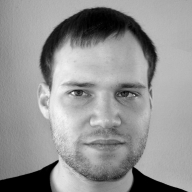
Stefan Kangas

Stefan Kangas

Stefan Kangas is studying his third year of his bachelors degree in Computer Science at the University of Gothenburg. He is currently the president of the recently started Fripost: the free e-mail association.

Chris Woolfrey: Fripost has been running almost a year. How has it developed?

Stefan Kangas: The association started in November 2010 – we more or less launched it with a presentation at FSCONS that year. During the spring we grew steadily and have now reached our goal of having 50 members, which was our aim for the first year. We still have a couple of months left until November, so we’re quite happy with that!

People have been using our email servers since around February. The systems are basically up and running, but at this point mainly on borrowed and donated hardware. We set our membership fee at 300 SEK per year (around 33 Euros) and that’s basically covering the running costs of an exclusive internet connection for the main server. Though it’s consumer grade at this point, we’re currently looking at a better solution; we want to be hosted in a more serious location.

We’ve discussed whether or not a virtual private server is OK, seeing as we want to keep everything under our own control. Obviously we want to control all hardware as well as the software. But at the moment we basically receive email and store it on our IMAP server. We have no outgoing email, though we are currently working on setting this up. We received the server just this week which has been lent to us for this purpose.

This spring we had a party which was quite successful, basically a “launch party”. We are looking to organize another party for October 1st. It’s nice that parts of the Fripost work are already going on outside the “main” channels, which means we can spread the work load amongst more people; a goal that we have for everything in the project.

We’re looking to keep this organization going for years, slowly scaling everything up as we go. We don’t want to jump right into the deep end of the pool, so to speak.

CW: Do you intend to compete with the likes of Google and Microsoft in the mail hosting market in future?

SK: We certainly hope to. Look, the way I see it we are already providing an alternative. Sure, we still have some stuff that needs sorting out, but to me, we have already achieved more than I would have dared hope for when we launched. So in my view it’s been a great success; and it’s all thanks to our members, people who have joined because they believe strongly in our ideals.

“The main strength of Fripost is that our members are dedicated to our ideas of freedom”

We think the cost of joining is quite high right now, but we hope to lower it as we get more members. People who already paying this arguably high price show a high level of commitment. That’s the main strength of Fripost: that our members are dedicated to our ideas of freedom.

Over at Gmail and Hotmail they obviously have some benefits, like much better uptime, and probably much greater bandwidth, as well as resilience to certain types of attacks, like distributed denial of service attacks, and stuff like that. But we have something they don’t have, which is a guarantee that it is the users who control their computing.

So this is a huge win. And basically, when you weigh everything together, the technical drawbacks are greatly outweighed by the social benefits. At least this is the way we feel, and obviously the people who have decided to join the association agree.

In that case, the question, really, is what one expects from a proper alternative more than anything else. And yeah, we would rather not have these technical drawbacks, but at this point they are inevitable. To resolve them we need more resources, which means growing, since we can never accept any outside financing for the primary stuff, because that would make users dependent on a third party. We need economic independence, as well as organisational independence.

CW: If a company offered Fripost a big donation, you wouldn’t take it?

SK: It’s not really about that. The way we see it, we can accept donations for “secondary stuff” or stuff that is not critical to the association. But the running costs have to be 100 per cent self-financed.

A one time donation that comes with no demands is just fine. Or at least, this has been the majority view up until now, but we haven’t gotten any such donations! Sure, if some rich dude wants to give us a million dollars, we would accept it. But only if we’re completely sure that we can do this without compromising our independence.

“The technical drawbacks are greatly outweighed by the social benefits”

Really, we don’t expect any outside donations. And the association has to be built in such a way that every step taken means we never expect any outside donations, because if we compromised on that, we compromise on the independence of our members. We’d probably never go to the EU and ask them for money for a project. Typically doing that means having to fit some norm concerning how these projects should be formed. It may or may not be the case that it would be what the majority of the members wanted to do, but we wouldn’t do it.

Let’s put it this way: if someone gives us a 19″ server, that’s just fine. But the membership fees alone have to be enough to keep it running. A case in point: we’ve already said ‘no’ to hardware – some huge rack server that took up like 8 units – that was too big for the association; we simply couldn’t afford to keep it running.

CW: Is finding open hardware to use an issue for Fripost?

SK: Yes, absolutely. One thing this work has shown us is that it’s not always entirely obvious what the limits to freedom really are or should be, where the line is to be drawn? Obviously projects like freebios, and cool guys working with open hardware, like OpenMoko, are already addressing these questions of hardware freedom, but at Fripost it is also about who owns what, who controls the internet connection, who pays for the electricity bills.

These are far ranging questions. Am I really free if I do not have physical access to the server? Am I really free if I do not have a root account? These are real questions.

I don’t know if our line of reasoning here is mainstream, but it’s something like this: if we have this association, democratically built, with democratically elected representatives, functionaries and administrators, with democratic by-laws and so on, then users will collectively exercise their freedom. That’s necessary for stuff like emailing, whereas it might not be for something basic like a text editor, that you just run locally. Email is a whole different thing; you need several servers at different locations, and it’s simply infeasible for one individual to achieve all this by themselves. So looking at it practically, in fact, not going for direct control of the servers, direct root access, and so on, means more user freedom, when you really think about it, it’s about the collective. Which is interesting, since superficially you would expect the opposite to be the case

When we started out we thought about this a lot. I think it was after Eben Moglen’s speech ‘Freedom in the Cloud’ that I first raised the question at our FSFE Fellowship meeting; we were quite unclear about what exactly to do and why, but we knew it was more than just the obvious “get box running, install postfix, win”.

“At Fripost freedom is also about who owns hardware, who controls the network, and who pays the bills”

We had to think about stuff like this a lot. We’ve even drafted a manifesto of sorts, starting with the idea of “user freedom”: what does it actually mean? We all know we have the four freedoms, but when you start discussing software as a service (SaaS), and even the questions posed by stuff like the Affero GNU Public License, it’s clear that it’s not always the case that these four freedoms are maintained. So we toyed around with the idea that one could define “free computer usage”: obviously, one needs to do all computing with free software, but also, one needs to exercise direct control over the hardware.

CW: That’s a real dedication to freedom that you’re describing. Is there a political implication to the community ownership model that you’ve outlined?

SK: We are trying to be a broad association for everyone who believes in our ideals. It’s not really about left or right here, though obviously we say some things that might provoke some people.

We say that a user can never attain the same amount of freedom if she is merely a customer, but that one really has to be a member if she wants the amount of freedom that Fripost looks to provide. We see it like this: if you are a customer, then you can leave, and you may or may not get to take your data with you. It’s not you, but the owners of the business that really exercises power over your computing. That’s always true of services in “the cloud”, which is what email really is once everyone hands management and control of their messages to Google or Microsoft.

It’s funny, because although the structure of the Internet is inherently distributed, along with many of its protocols like SMTP, the way that the Internet is used today means that most communication ends up going through just one of a few centralized nodes, and the power has moved away from the users.

But it’s important to remember that this isn’t just a problem with Google and Microsoft and the like. How distributed were services like email to begin with? My email might have been with my Internet service provider, my university, or my employer. So our association is about more than just “taking back” the Internet; it is about really freeing the Internet’s users once and for all.

Obviously emailing is just one out of a gazillion different things that needs freeing, but it is the most crucial one, or at least we believe so. Citizens communicate with authorities, employers, and all sorts of people via email, and we don’t do that to the same extent on Twitter or Facebook. We don’t do our taxes on Twitter or Facebook, but we can get messages about them via email. But email isn’t necessarily any less Free.

It’s really about having the users exercise direct control over their computing, and we want to feel free, and to be free in our lives. We don’t need to get embroiled in politics in order to achieve this. Everyone is welcome to join.

CW: Do you think that Fripost’s dedication to freedom could be an obstacle to growing to have many more members?

“Email is the service that most crucially needs to be freed”

SK: No, we completely think democracy is feasible on a large scale. But you have to start small, and take it step by step.

CW: Tell me more about the practical side of how Fripost runs its systems.

SK: At the moment, we have one server that acts as main storage for all emails. Users connect to this server via IMAP [use abbr tag], and is the main server, the most important one for users; this is the one we are looking to upgrade to a serious location, we hope within the next two months. In addition we’ve got two servers at two different locations which are receiving email from the open internet. They move the emails over encrypted SMTP tunnels to the main storage servers. At a completely separate location we have a backup server, with two identical disks in a raid 1 array. Currently, it backs up the main server every 20 minutes. The main server has 2 of these disks too, also in raid 1 array. In terms of the webmail interface, we’re using Roundcube.

We’ve got the git/wiki on another server, and the web server is separate too. We’re encrypting all data on the main server as well as the backup server, and the disks are encrypted, so we hope that gives additional protection.

We’re working very hard to keep the servers secure. We’ve been lucky; we’ve only had one occasion of downtime on the IMAP server since we got it running in March. And we hope this improves once we upgrade stuff, and get better hosting.

In terms of the software we’re using, we’ve got Debian GNU/Linux squeeze, postfix, dovecot, apache, Roundcube, Org mode, ikiwiki, bacula, and plenty more.

CW: What are the plans for Fripost in the next 12 months?

SK: To involve more interested people. We’re keeping everything in Git: minutes from meetings, documentation, the website, our wiki…

“We want to spread information as much as possible both inside and outside the association”

The technical documentation is especially nice; we try to keep it in such a state that if one of the admins goes AWOL, then anyone can pick up where that admin left off, and I think there’s almost a recipe for building our systems – it’s all there. If someone would like to give it a try it would be awesome, and if our documentation is poor, patches are welcome. If something is unclear we would be delighted if someone pointed out where it needs improving.

We want to encourage people. Some people were thinking about building a Fripost Debian package, so that people could just install it and get most of the stuff automatically.

Basically, we want to spread information as much as possible, and share knowledge, inside and outside the association. We want to see similar associations cropping up all over Europe, in lots of countries, even all over the world. So if someone wants to do it: go for it! We’d encourage them. It’s a lot of fun, it’s really rewarding work, and you’d be amazed when you see the positive response you get. Nobody who’s been actively working on this over the last year has expected to see these kinds of results this fast.

But it’s so important, and it’s easy to do. It’s all very feasible, and a lot of fun. It’s a concrete way for people to create pockets of Freedom in which people can participate. Obviously you need some technical people that can set up the servers and keep everything running, but this is the good part: non-technical people can free stuff that would otherwise not be possible for them.

“It’s a way of opening up the Free Software movement to people that we don’t normally reach”

It’s a way of opening up the Free Software movement and our ideals to other areas of work, to reach people we don’t normally reach. We’ve seen people come to Fripost that would never have come to a Fellowship meeting, where we’re always discussing hardcore stuff like software patents.

Because let’s be frank: that’s not what really gets people going. Obviously it is important for everyone but Fripost is one way of opening people’s eyes to the right direction without scaring them away with technical stuff, or law stuff, or abstract ideas. Instead, we’re dealing with something concrete that they are familiar with and use every day. And people are worried about this stuff! People are really, really worried about user freedom on the internet. Facebook has been a real eye-opener.

The Free Software movement needs to think about how to channel that, and also take the opportunity to spread our ideas, since we’ve been talking about this stuff for way longer, and we know about user freedom. And when it comes to questions people have about Internet freedom, our ideas are superior to most of what anyone else produces.

Fellowship interview with Richard Shipman

August 23rd, 2011

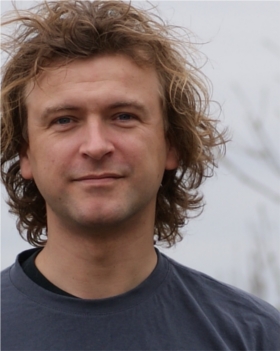
Richard Shipman

Richard Shipman

Richard Shipman, Teaching Fellow at the Computer Science department of Aberystwyth University, has extensive experience of working with Free Software and discussing its strengths and weaknesses with others. In this month’s interview he shares his thoughts on the importance of promoting it alongside alternatives, of the extension of Free Software at school level, and what role the computer sciences can play in relating the messages of Free Software to other institutions and disciplines.

Chris Woolfrey: When did you first get involved with Free Software? Was it through your studies?

Richard Shipman: I first used Free Software many years ago; I think I was using FreeBSD or NetBSD on my Amiga in the ‘90s. It was purely through an interest in different operating systems: I’d used a reasonable number of different mainframe operating systems and been a Vax sys admin, and was looking for something that was more like that to play with on my home machine.

CW: So it was the practical rather than the political benefits that sparked your interest?

RS: Absolutely. I wasn’t very aware of the political movement at the time – it was the early to mid ‘90s, when we used Gopher rather than HTTP on the internet. But it was the history of Free Software at Aberystwyth that got me really involved, and trying to build on the reputation that some of the alumni have developed in the community: Alan Cox (formerly maintainer of the 2.2 Linux kernel, and a major influence on the Linux kernel since 1991) started his degree here, and has become a friend through one thing and another. AberMUD, which is named after Aberystwyth, was the first multiuser game that I played many years ago. And I shouldn’t overlook Alun “Da Penguin” Jones, who might have had some influence on Tux. The town and university are pretty small, but there is a community of Linux users that meet up informally at the moment.

I suppose that I’m quite vocal about the political side now, and I’ve been getting involved with the advocacy side a lot more in the past few years. I’m mainly a pragmatist and attempt to use the best tools for the job, and most of the time I find that Free Software is the best tool, even for novice users. It’s just that we don’t have the advertising budget that the competitors have.

“most of the time Free Software is the best tool, even for novice users”

CW: Has a culture of using Free Software at Aberystwyth contributed to its reputation for producing great programmers and developers?

RS: At Aberystwyth, we attempt to produce good software engineers. We provide an environment in which students can learn and experience different aspects of the computing industry. We provide Free Software for our departmental students as well as the “corporate standard” provided by the Information Systems department so the students get to experience both environments and make a free choice as to what they prefer. In my honest opinion, the students will gravitate towards the best tools and a lot of the time that will be Free Software.

Even on the Microsoft platform, we encourage students to use Eclipse and Netbeans as their development environment, for example. Then they are also able to use the same tools on OpenSolaris desktops or on their own Linux desktops.

There is also quite an active IRC culture, leading to people getting an informal training on how communication works in Free Software projects. And then there’s also the general environment where researchers have to make something work with very few resources, and that is generally done with Free Software rather than a proprietary system.

We depend on the reputation of our students and alumni who do a fantastic job of spreading the word that Aberystwyth is a great place to be and to get involved with Free Software. Having 20 students in Aberystwyth hoodies running around at FOSDEM, for example, gets people asking questions like “Why are Aberystwyth here in such large numbers, what are they doing?”

Just last weekend at OggCamp, I met 4 graduate alumni who are all doing interesting things in the Free Software community.

CW: Does the Computer Sciences department at Aberystwyth promote Free Software over proprietary solutions?

RS: We have a very mixed culture here, but we do try to offer a balanced view. I do find myself and colleagues promoting Free Software as an alternative pretty heavily in order to counter the proprietary message coming from other parts of the university.

I did build a freedom toaster a few years ago and that sits in the foyer of the department so that students can burn CDs and DVDs of up to date distributions – especially useful if they live in private accommodation with ADSL lines and usage caps.

We find that we tend to spend a larger amount of time covering Linux and other Free Software than proprietary simply because the students are generally familiar with Windows when they come to us, as the school system has taught them about a Microsoft monoculture.

“the school system has taught students the Microsoft monoculture”

CW: So, it’s with the aim of balancing students’ understanding of computing in general that you might promote Free Software?

RS: Absolutely – the last thing that we ought to be doing in university is telling the students that Free Software is the only correct way. They should be exposed to alternatives and be able to come to that conclusion on their own.

Of course, they sometime make other choices, but as long as that’s their own informed choice, they’ve at least experienced a set of options and made up their minds.

CW: The reason for that, presumably, is that the university can’t be seen to favour one system over another?

RS: As a department or institution it would be wrong of us to dictate that one way or the other is the only way to work. Students should be attending university to learn rather than to be taught; I’m afraid that I’m a little bit old fashioned in my opinions and expectations of students. We provide a safe environment in which they can explore options and make up their own minds. After being spoon fed in schools with “the answers” for so many years, it can take a while for them to learn that there is not one answer but many, and they will have to decide which suits them best.

As for favouring one style over another – we offer a BSc Open Source Computing, but don’t offer one in closed or proprietary computing. I take groups of students to Free Software conferences, but not to Microsoft or Apple conferences; students compete and take part in Google Summer of Code, but also in the Microsoft Imagine Cup.

I think that we could be seen to favour one style, but a monoculture can breed complacency and stagnation, so having a number of opinions is useful, if only to see how not to do it. Overall I believe that the department generally promotes Free Software if only to make up for the disproportionate marketing force of the alternatives.

CW: So the department has a duty to promote Free Software because of its unnatural disadvantage? And does that apply to education at a lower level, like secondary school?

RS: To your first question: yes I believe that we do, in the same way that society will positively discriminate for a minority; although that is not too good an analogy as it makes the Free Software community sound like the poor relation.

“Government directives about looking at Free Software alternatives seem like lip service”

I was angered by the recent Bristol City Council decision to adopt Microsoft over Free Software and the Computacenter gag on them to even discuss the way in which the decision was made. It was looking so hopeful for a while. The government directives about always looking at a Free Software alternative seem a little too much like lip service at the moment, but hopefully they will provide a platform from which campaigning can take place and stop companies from this kind of anti-competitive practice.

As for secondary schools, if we can get Free Software into schools then it will hopefully start to mitigate the “retaining costs” that are always quoted when switching from Windows to Free Software desktops.

I’ve been getting a little involved with schools through the Computing in Schools project run by the Royal Society and we’re working in Wales with that and with the Technocamps project to simply get more computing taught in schools rather than ICT. Showing the kids that there’s more to computing than just Excel and Powerpoint is vital.

Computing itself isn’t being taught at very many schools, but ICT is. It’s the old analogy that ICT is like driving the car, but computing is about how to build a car, maintain it and design a better one.

CW: It’s about promoting computing as an aid to thinking rather than a method of working?

RS: Yes. Computing doesn’t necessarily need a computer: it’s an analytical way of looking at problems. Promoting a computing way of thinking is a way of looking at problems, promoting analytical thinking and supporting the scientific method. It is about allowing you to be creative rather than being limited to a script of known solutions.

“Showing the kids that there’s more to computing than just Excel and Powerpoint is vital”

CW: Does your department encourage other disciplines within the University, such as English Literature, to take the same creative approach? And does FSFE play a role in enabling this kind of dialogue?

RS: I’m not sure how much we would be able to promote things to the English department, but we certainly work with the Arts and Drama departments. We have a certain amount of interaction with them already and are able to provide Free Software solutions to problems. The development of Arduino has meant that we get requests for assistance every so often, and being able to offer that sort of Free Software solution is helpful as a way of breaking the ice with the whole Free Software discussion. I was incredibly impressed by Chris Gutteridge, from Southampton OpenData Project, at OggCamp, and what he was tying to achieve: to try to get all disciplines involved in opening up all their data sources.

Personally I think that the earlier that we can get more rational thought back into schools, the better. Computing is a very good way of introducing kids to cause and effect and scientific thinking. If they’ve been introduced in schools then there are less remedial actions that have to be taken in university to help the students with whatever their choice of study is.

If the data curators can be persuaded to use Open Standards then the flexibility of data becomes enormous. If FSFE can help to highlight the fact that so little data is open these days, and that it’s to the advantage of everyone that we use Open Standards, then I think that would be a very worthwhile cause. Of course there are “open” standards and Open Standards and we have to be very careful about the corruption of words by interested parties.

Fellowship interview with Bernhard Reiter

July 23rd, 2011

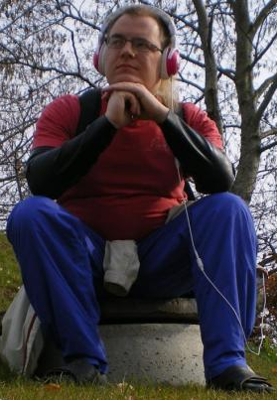
Bernhard Reiter

Bernhard is founder and Executive Director of Intevation GmbH, a company with exclusively Free Software products and services since 1999. He played a crucial role in the establishment of FSFE as one of its founders, and architect of the original German team. Beside that he participated in setting up three important Free Software organisations: FreeGIS.org, FFII, and FossGIS.

Chris Woolfrey: You were a co-founder of FSFE in 2001. In your view, has the organisation been achieving its aim? It’s still largely unknown to the public.

Bernhard Reiter: When setting out to change the world, you can’t expect it to jump right away. And I believe FSFE is becoming increasingly known. When setting up FSFE, we did not know precisely what we would be able to achieve, we just tried our best. Could we have reached more? Did we dream about being larger, more influential, having more Free Software everywhere? Yes of course! Still, I believe FSFE can be proud of what it has achieved. And we stayed within the original goals.

Most of FSFE’s successes stand for themselves. We wanted to be a reliable organisation, which would be able to motivate people to stay within FSFE for a long period of time, and to be able to do a lot with just a little budget, but a lot of dedication.

My friend Georg Greve (founding president of FSFE) is a great example of that. He was seminal in FSFE’s success. He’d just finished his university degree and we managed to convince him to work for FSFE full-time – letting go a career as a physicist – and he worked without getting the promised pay for a long while, building up personal debt until we found our first visionary sponsor. We knew that for FSFE to be successful we would need to have an anchor person and Georg agreed to be that person. He did it well. People who worked against the organisation thought that they would only have to handle this single person, but he had the full power of ten thinkers and many more volunteers behind him. When FSFE decided to support a particular argument or political position, Georg presented it with personal passion.

Of course, funds have always been important too; finding the first visionary sponsors was very hard. One of the first was Daniel Riek, who saw the potential and gave us a one time donation to cover some set-up costs. Then there was Reinhard Wiesemann from the Linuxhotel, and you have to know that Reinhard is a self-made entrepreneur and critical thinker: he was more into doing something practical for helping Free Software like writing another document format converter, and there I was trying to get some money from him to do “political work”, which sounded like it meant “just talking”. Here was me and a bunch of guys with a new organisation that only a very limited track record. In the end I managed to convince Reinhard, and then we were able to pay Georg a little bit.

I am really grateful for all that support during the early days; FSFE would not have taken off otherwise.

“I believe FSFE is becoming increasingly known”

CW: Would you say that plurality – people from all walks of life becoming involved with FSFE – is one of the organisation’s real strengths?

BR: I’d say the opposite: that we are still, as a group, too homogeneous. Most of FSFE’s members have very strong technical IT knowledge, and are young and male. Compared to most other Free Software related initiatives, though, I believe we are doing fairly well, because we do have a significant number of non-programmers, and females, and people more interested in the non-technical parts, as part of our organisation.

We wanted to bring Free Software into the mainstream, and so FSFE has had to be very approachable from the point of view of “society”, general journalists, companies and politicians. When you are technically trained it is easy to become arrogant towards less computer savvy people! We tried hard to avoid this, so that we could relate to and relay how non-computer people might think and feel.

CW: Ten years later has FSFE succeeded in being approachable? Do you think ‘ordinary people’ are aware of issues of digital freedom?

BR: Yes! Over the last 10 years FSFE has been approached often, and we’ve given many interviews and talks, and explained the importance of Free Software for society to many, from the local community party table, to companies and public administrations of all sizes, plus the military and the United Nations.

Topics like electronic data processing, software and its relationship with the economy, democracy and society, and the power of all these tools, has increasingly gone public. More people care about them now. Many regular daily newspapers mention Free Software or FSFE. There is almost nobody that hasn’t heard about GNU systems, Iceweasel, Libreoffice or Free Software – often by other names, but still.

Personally I am convinced that there are no ‘ordinary’ people or ‘regular’ users. Humans are much more diverse and should not be treated like a big group. Most people do care about their freedom. If they do not understand why their use of computers and software is related to this, then it’s because nobody has explained it to them properly.

“if people do not understand why their computing is related to their freedom, it’s because nobody explained them properly”

Free speech and the ability to read and write are considered very important. Software is in the same category, but this is not yet taught in school, so we don’t have the great literature on the subject. Yet.

CW: After ten years you’re stepping down from your post. Why?

BR: I have been a volunteer for FSFE since shortly before it was officially born. More than 10 years; it is a long time. Some of the administrative work started to get boring. The work with volunteers stayed fun.

You start to realise that you can’t do this forever anyway, so you start thinking “where is the next person”? The big break was two years ago, when our first anchor person stepped down and we basically got the second generation taking over the full leadership of FSFE. It was important then to not stand in the way when people like Karsten Gerloff (current FSFE president) and Matthias Kirschner (Fellowship Coordinator and German Coordinator) came in and had to find their own style for leading FSFE.

They were the future. I was staying in duty as Matthias’ Deputy, mainly to help him. Matthias is doing great, and he’s now surpassed me in many respects. This year, with Torsten Grote (Deputy German Coordinator) we’ve found a great new Deputy.

Beside my voluntary work for FSFE, I’ve been running my own company, Intevation, which also grew, demanding more time. We are currently about 25 full-time staff. I owe them a big thank you. My co-owners Jan-Oliver Wagner, Frank Koormann, and all the employees allowed me to help FSFE in my work time, to have Intevation cover travel costs and to become a patron of FSFE. Intevation also holds shares in two daughter companies: Greenbone Networks, which sells a product for security compliance based on OpenVAS, and Kolab Systems AG, which provides the well known groupware Kolab. Georg is co-owner and CEO of Kolab Systems. All three companies are respected Free-Software-only businesses.

I am staying with FSFE, but not on constant duty. Now I can pursue more long term issues within FSFE. I’m seeking new ways to get all the interesting brains that make up FSFE together. In the beginning when our group was small, we could have long conversations on our internal mailinglists but now that FSFE has grown, this mode doesn’t work.

I want to investigate how we can finance Free Software, especially boring maintenance work and larger innovate steps. There are a number of issues people would like me to write articles about: cloud computing, and the future of web applications, are raising a number of questions. Maybe I’ll start blogging.

CW: Given the good work of the people you’ve mentioned, should FSFE be increasing its number of professional staff?

BR: Our long term goal is that FSFE is not necessary any more; in a world where our message is mainstream. But I’m sure we’ll have to grow over decades for that to happen, both in terms of professionals and volunteers: we must have them both. Some goals can only be reached when you are organised, systematic, resourceful, and to the point – this includes a lot of boring work and structure – and other problems are better solved by a large number of people contributing a little. Sometimes just their ideas or opinions.

Early on it became clear that for the coordination and for anchoring within politics, FSFE would need to have professionals. But it is about paid staff and volunteers together.

A paycheck allows someone to have more time to dedicate to what they like to do and would do, anyway, as a volunteer. More volunteers, donors and Fellows allow us to pay more people, who in turn help to spread the message to find more help.

“Our long term goal is that FSFE is not necessary any more; in a world where our message is mainstream”

CW: Proportionate growth, then. But how do we go about financing Free Software projects, particularly when they require less interesting work to be done that may not suit a volunteer?

BR: Once you’ve understood why it is important to have a financial-chain of Free Software “makers”, you can start paying for the Free Software that you are using. This is what I’ve been doing with Intevation for a while: instead of asking others to pay for Free Software, just start paying for Free Software yourself.

For organisations, especially companies, I recommend they pay 10% of what a proprietary license for a comparable product would have cost them. Remember, you would have had to buy that product for 100% and your business would still have to work. Give 1% of the revenue (not profit) back to the Free Software components that you have used to create the IT-solution for each project.

We should be experimenting with App Stores so we can see if people are willing to pay for Free Software a bit this way. Making voluntary payments is still way too hard. Maybe your GNU operating system distributor could offer the service to forward some of the money for you. I’d really like to buy more services for my GNU systems, but currently I lack attractive offers. If we could make it the social norm to voluntarily pay for Free Software, that would be a real success.

Photo by Torsten Grote, license CC-BY-SA.

Fellowship interview with Guido Arnold

June 23rd, 2011

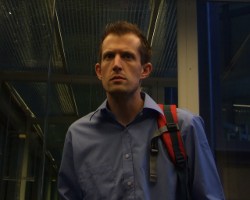
Guido Arnold

Guido Arnold

Guido Arnold is Deputy Coordinator of FSFE’s Education Team, as well as a member of the German team, and a translator of fsfe.org and gnu.org.

Chris Woolfrey: What has FSFE’s education team been up to lately?

Guido Arnold: The main task throughout the last few months has been the development of the team’s mission statement. The Education Team was dormant for quite a while, and even after its reactivation, it didn’t get momentum right away. I thought that one reason for this might be that nobody really knows what we are supposed to do. The mission statement shall fix that.

We also discussed possible future tasks for the Education Team, and before we started with the mission statement we were working on leaflets explaining the benefits of Free Software in education. I spent a lot of time collecting news on this subject, and put them together in blog posts.

The thing with Free Software in education is that there are already many, many groups throughout Europe working in this field. Many of them are inactive however, because there are only a few people who are active and the rest stay silent. It would be great to get all those people who are active to work together, and that’s part of our aim.

I spent some time introducing new members to the Education Team. And we’ve had to deal with issues internally: we were asked if we knew of any “free” material for teaching kids the concepts of Free Software; at first I thought this would be easy, but I was mistaken. So, I spent some time researching and asking around.

I met with another Education Team member from France who studies marketing and sales, and we discussed how we could find out about our “target groups”. We had two Fellowship jabber meetings to get input from other FSFE Fellows. We are in contact with the education people from gnu.org and OFSET, and contributed to the UK Team’s letter to The Guardian relating to the newspaper’s educational resources. We also organised ‘Freedroidz’ workshops in Bonn and Berlin where we taught young people about the four freedoms of Free Software by programming Lego robots.

Besides working on our mission statement, we’ve tried to strengthen our network in the Free Software education community.

CW: In your reaching out to other organisations, who has been the most receptive?

“There are already many groups throughout Europe working on improving Free Software in education”

GA: Well, that’s hard to tell. When I contacted groups and individuals it was usually about a specific question or project, and I mentioned the Education Team alongside. A few people got interested and asked how they could help, and some groups contacted us directly. We were actually the ones being receptive, so to speak. Mostly though, we’re talking about other organisations that are promoting Free Software in education, like OFSET, gnu.org, and FSuB e.V.

We have also been contacted by political parties; or to be more precise, FSFE got contacted in regards to some educational questions and we were able to deal with them.

CW: What are the political parties who’ve contacted you interested in?

GA: They’re interested in our view on how things should go in education, what should change, and more. They’re looking to us to tell them what a political party can do to make that change happen, and what they should demand to make us happy.

CW: Do you think these parties can deliver what’s needed to improve the use and understanding of Free Software amongst young people?

GA: I don’t know. But I am quite confident that in Baden Wurttemberg (one of the German federal states) some things can change for the better. The Green Party has been mentioning Free Software in their program for a while, but was always the smaller coalition partner. Now, for the first time, they actually lead a federal state, and as such they have much more say over decisions affecting education. Fortunately their coalition partner is not against Free Software either. We’re keeping a close eye on developments here.

We’ve had to deliver our responses to political groups quickly in order to make our voice heard before elections, and express rather generic demands, which was better than expressing no demands in time. But to articulate political demands more specifically is still on our to-do list.

The thing is, once you start thinking about it, a task like this isn’t as easy as it may seem. It’s easy to demand “stop product oriented education in ICT”, or “teach children computer skills, not software brands”. But suggesting how this should actually be done, in a particular German federal state which has its own rules and regulations for example, is actually quite complex. You need to know a great deal about these rules and regulations in order to make a qualified suggestion to politicians.

I once saw a website offering training for teachers. This was in a state where teachers have to collect a certain amount of “training points” per year. And on this website they offered a course called “SQL databases in Windows (5 points)” alongside a course called “SQL databases in Linux (0 points)”. The motivation to pick the GNU/Linux course will drop in every Free Software friendly teacher if she sees that she’ll be penalised in ways such as this for doing so.

“You need to know about rules and regulations in order to make a qualified suggestion to politicians”

It’s often said that the educational institutions can pick whatever software they like, but if you have a closer look, you often find out that there are obstacles preventing them form choosing Free Software. For example, in North Rhine-Westphalia, Germany, every school is able to use Free Software if they like, but the software to submit statistical data to the state is mandated; with that they have no choice. Unfortunately this software is proprietary and runs on Microsoft Windows only.

I heard that some very ambitious teachers got it to work with WINE. But still, it’s a hindrance. And the development of that proprietary statistics software was paid for with taxes. I asked them why they don’t release it under a Free Software license, and they said that they can’t.

If you want people to act upon something, you need something to pinpoint the problem. I’m grateful for for every email we receive which points us to good examples which we can use to illustrate to politicians that there is something wrong with the way Free Software is currently used in education.

CW: In your experience, is there a relationship between political orientation and support for Free Software? Are certain types of political parties more likely than others to push for more Free Software in schools?

GA: There are parties who are more Free-Software-friendly than others, but generally I think there’s scope for anybody who favours freedom to support Free Software at a political level. I don’t see why particular parties should oppose Free Software, except perhaps because their political enemy is supporting it. I just think the argumentation can be different depending on which party you talk with. Example arguments being that support and development of Free Software solutions can strengthen the local economy, or that lower hardware requirements are better for the environment. Both these arguments are popular. I don’t like this partisan approach that much, because the most important point for me is that the children learn about Free Software. But I guess, you’ll have to start with arguments like these which are strong appeal to particular groups in order to get ‘a foot in the door’ and initiate further negotiations.

“You have to start with popular arguments in order to get ‘a foot in the door’”

Politicians aren’t any different than your neighbour in this respect. They just don’t know about Free Software either.

CW: It sounds like you’re putting a lot of your time into working with the Education Team; how do you find the time to balance working life and doing all this voluntarily?

GA: Finding the time for it is not that hard! The difficult part is to decide what you drop instead. When my interest in Free Software started to grow, I cut the amount of TV I watched. As I learned more about it and realized how important the mere existence of Free Software is, I cut down on other things, too. Imagine how proprietary software corporations would be acting today if Free Software didn’t exist! The positive impact that Free Software has on the world is worth making time for.

If you compare the amount of time with a random couch potato, or people who play video games all night, you’ll see that I don’t actually spend that much time on these things. My estimate is about seven to ten hours per week. What helps is to track your time. It makes you more aware of the “preciousness” of the time. On bad days, I might spend 4 hours doing “FSFE stuff”, but have to admit at the end of the day, that I didn’t achieve very much. Tracking time together with the result helps me to make a better use of it.

And I’m lucky to have a very tolerant wife who allows me to spend all that time!

Fellowship interview with Florian Effenberger

May 23rd, 2011

Florian Effenberger

Florian Effenberger

Florian Effenberger has been a Free Software evangelist for many years. Pro bono, he is founding member and part of the Steering Committee at The Document Foundation. He has previously been active in the OpenOffice.org project for seven years, most recently as Marketing Project Lead. Florian has ten years’ experience in designing enterprise and educational computer networks, including software deployment based on Free Software. He is also a frequent contributor to a variety of professional magazines worldwide on topics such as Free Software, Open Standards and legal matters.

Chris Woolfrey: How did you first get involved with OpenOffice?

Florian Effenberger: I started using Free Software very early, and installed my first GNU/Linux in June of 1994. At the end of the 90s, I started using what was, back then, StarOffice, and was involved in the user newsgroups. Free Software attracted me, as I met very open-minded and creative people who were engaged with passion and stood behind important ideas and values.

When the OpenOffice.org project started in 2000, I followed it closely, but didn’t get directly involved before 2004, when my first proper “engagement” took place at a trade show. In 2005, I was offered the role of German Marketing Contact for OpenOffice.org, and from that point on I got more and more involved, until I eventually became the Marketing Project Lead. These days I’m very active with LibreOffice and The Document Foundation, and also serve on the Board of Directors of the German non-profit Freies Office Deutschland e.V.

I’ve wanted to give back something. Being a long-time user of Free Software and benefiting from it, it is a wonderful experience to tell the world about it, and help spreading the word.

CW: What did your time working for OpenOffice.org teach you about marketing and Free Software?

FE: I think marketing serves a very important cause. You can have the best software and the most qualified developers, but when the world doesn’t know about what you offer, nobody will use it. Of course, it’s important to point out, for completeness, that without developers, the marketeers would have nothing to market either; but people don’t always see it that way.

“there’s so much to Free Software that many people don’t see at first glance”

To me, marketing Free Software serves a variety of purposes. Telling people about the advantages of Free Software is one important part of it; there’s so much to it many people don’t see at first glance, like Open Standards, freedom to use, study, share and improve it, and preventing a digital gap. One of the tasks of marketing Free Software is to find the right balance between ideological and technological views, and those that are important for average users who are not so deeply tied to the ecosystem just yet.

Another task of marketeers is to establish communication channels not only to users, but also to corporations who adopt or develop Free Software. Promoting the right image and finding the right balance in what and how you communicate is crucial to reaching a broad audience and conveying the benefits.

CW: Did marketing concerns like these cause LibreOffice to adopt its new name, or was the re-branding primarily for legal reasons?

FE: When we started The Document Foundation, we talked about continuing with the brand that the Community had shaped and built over the past ten years. However, things turned out the way they did, and we are happy and proud of the perception of the new brand. Indeed, LibreOffice was not only chosen for legal reasons – it also marks the next step, an important evolution. This is reflected by the name: previously, we were open, now we are also “libre”, meaning free.

CW: How does the Document Foundation work to ensure that the LibreOffice community retains this principle of freedom within its products and operations?

FE: One of the reasons for setting up The Document Foundation in its current form — i.e. as a vendor-neutral Foundation in German law — was to provide an ideal framework for our community and its ecosystem to grow. All our assets are maintained by the Foundation and based on our open, meritocratic and transparent approach. This ensures that, as an example, the brand and trademark are not under the control of individuals or corporations, but rather by the community itself.

As an example: our trademark policy has been publicly discussed, and we incorporated many proposals and ideas that were raised on the mailing list.

“we have more than 180 new code contributors, more than 60 translators, and roughly 6,000 people contribute to our mailing lists”

CW: Has project growth continued since the height of press interest in the split from OpenOffice?

FE: We are still overwhelmed by the amount of contributions and contributors worldwide. Many organisations and corporations joined our idea from the first day, giving their public statement of support, and we managed to raise €50.000 in donations in just eight days, which is just amazing.

In addition, we have nearly 70 mirrors worldwide, offering LibreOffice for download. Plus, we have now more than 180 new code contributors, providing patches, features and bugfixes for LibreOffice, plus more than 60 localisers translating it into various languages. Roughly 6,000 people contribute to our mailing lists, and about 7,500 opted in to receive announcements on new versions and releases. Plus, we’re very much in line with our release plan.

Besides these numbers the feedback from the community, end-users, and corporations, is just fantastic, and encourages us to follow the path that we’ve taken.

CW: Do you think The Document Foundation does enough to appeal to people who don’t already use Free Software? Roughly what share of the whole office suite market does LibreOffice have?

FE: We’ll be providing detailed download statistics soon, but Windows is one of our most popular platforms. We’ve already seen corporations and organisations migrating to LibreOffice on a variety of operating systems, and the feedback we receive clearly shows that people not only understand why we were taking this approach, but that they also welcome and applaud the path we’ve taken. We have users, adopters and contributors from all fields. Given that release cycles (particularly in larger organisations) tend to be measured in months, it is yet too early to look at a comparison of market shares however; the Document Foundation has only existed for about eight months now.

CW: How do you see the relationship between LibreOffice and OpenOffice developing in future?

FE: The recent announcements made by Oracle about OpenOffice.org have raised new questions. But from the very first day, The Document Foundation has been open for everyone, and we will continue to be open for any interested party to join us. I think the past months have shown that we’re on the right track, that the approach we’ve taken and the model we follow is ideal for a community like ours. I am happy to repeat our invitation to everyone to join us and to contribute to the success of a truly free office suite.

CW: But given what has happened with OpenOffice recently, how will the foundation ensure that LibreOffice’s financing and philosophy remains community-based in future?

FE: The Document Foundation has been established to ensure a healthy framework, independent from one corporation’s business: that’s what our vendor-neutral approach and set-up as a Foundation based in Germany is for. The success of our fund-raising challenge has shown the wide support for what we do, and that people are willing to give. Of course, we work in an ecosystem where corporations can participate and benefit, and we are also looking into a variety of options on how the Foundation itself can raise money for achieving its goals. Our community by-laws take precautions to avoid too much influence based on money rather than on merit.

“our community by-laws take precautions to avoid influence based on money rather than on merit”

CW: In relation to both growth and neutrality, how do you see the relationship between LibreOffice and the Document Foundation in relation to other Free Software projects?

FE: We have seen many successful and important Free Software projects, based on Foundations and comparable structures, with the same virtues that we share — openness, transparency, meritocracy. Each of these projects has their own unique history, and so do we, but the principles they’re built on are comparable. So, I think we are in a good neighborhood.

There are many Free Software projects, and lots of them have quite a few things in common; in terms of governance, but also in technical terms, and as part of the global ecosystem of Free Software. Cooperating and working with each other, exchanging thoughts, ideas, brainstorming, but also discussing issues which more than one project is facing: all these help greatly.

Nobody has to re-invent the wheel, but can benefit from what is already available. A good example is our infrastructure: we’re based entirely on Free Software, from web server to wiki, blog, mail server, mailing lists, our planet, and much more. We not only use it, but also contribute back — for the mailing list system we use, one admin colleague has written tools that are Free Software. Plus, right now we are working on providing cross-compilation of LibreOffice for the Windows platform, to enable building it for that OS from within a free build environment.

Actively cooperating as well as benefiting from other Free Software projects is one of the things that makes the dynamics and fast development in this area.

CW: Given that you fit so well into the community, and that you’re growing at an impressive rate and in keeping with targets, where next?

FE: We’ve set a pretty good basis for the future. The next major step is legally setting up the Foundation, which we’re working on at the moment. We have summed up details on this in a blog post.

The improvements in our development scheme, plus the 180 new developers, and all the other volunteers with their amazing work and their creativity, already help us in making much bigger steps. We’re evaluating future ideas and major improvements to free office suites at large: everyone’s invited to shape the future together with us, and I’m pretty sure it will be exciting. The good thing about The Document Foundation is that it will provide a framework for all future developments, so people have the means of coming up with cool new ideas.

Fellowship interview with Michiel de Jong

April 23rd, 2011

Michiel de Jong

Michiel de Jong

Michiel de Jong has worked as a programmer, researcher and sysadmin in Amsterdam, Oxford, London and Madrid, where he ended up as a scalability engineer for Spain’s national social network Tuenti. In Winter 2010 he took a two-month hacker’s holiday in Bali to set up the Unhosted project. He now lives in Berlin, with Kenny Bentley and Javier Diaz, where they plan, donations permitting, to work on the project full-time.

Chris Woolfrey: Would you like to explain the Unhosted project in your own words?

Michiel de Jong: There are several ways you could explain it; my favourite angle is the software freedom angle. Software freedom used to mean the right to control (use, share, study and improve) the source code / the program that the application executes – the definition that FSFE uses. Back in the day, that was enough. It was taken for granted that you already had control over the data that the application handled; of course you do, it’s on your computer, or on a server where you have full access to at least the data that your applications are using.

For installed software, both desktop and server, that view used to be accurate: if you controlled the source code you had software freedom. But then, slowly, installed software was pushed further away from the user by hosted software (stuff like Google Docs, Facebook and Twitter). Hosted websites like these aren’t primarily a source of information; they are interactive applications, and in this context software freedom doesn’t exist.

It’s absurd that hosted software makes you surrender your data to the author of the application in question, but it’s what happens. It happened slowly, because informational websites became dynamic websites, and those dynamic websites then started accepting user input and slowly became interactive software. Now fully hosted software is widely used, and people use it to replace locally installed desktop applications.

“Software freedom requires code-freedom plus data-freedom”

In the shift from local applications to hosted applications software freedom got left behind. Nobody talks about locally installed software any more, they talk about hosted software, yet some people say “I run an entirely Free Software stack on my laptop; only the firmware of the graphics card is proprietary”, and that’s a mistake, because so much of the ‘software’ that they use is not installed locally on their laptop, it is merely viewed through their web browser.

The Unhosted project aims to invent and promote a way to fix these issues. Software freedom nowadays needs to be not only code-freedom; it must be code-freedom plus data-freedom.

CW: How does Unhosted achieve this?

MdJ: We’re separating the code of an application from its data. When you log in to an Unhosted web application, the URI in the address bar determines where the code lives, but the domain succeeding the ‘@’ symbol in your username determines where your data lives; this frees your data from the hands of the application server, and frees the application server from the burden of your data.

This means that free of charge hosted Free Software web applications become feasible again. After all, there is an obvious Free Software replacement for Microsoft Windows: GNU/Linux, just as an obvious Free replacement for Microsoft Office is Libre Office. But what Free Software can so obviously replace Google Docs? Why can’t you go to ‘www.libredocs.org’ and use Free Software on the web, just like you can with desktop software?

The simple answer is that the costs of running software remotely on a server and providing it as a service are too high to be able to provide it free of charge. In order to write Free Software, all that is required is the time and skills of the developers concerned. But there is no way to make Free Software available to the world online which doesn’t involve a monetary cost, because doing so requires the use of servers, and whoever owns those servers will charge you a monthly fee. Our architecture for separating code and data, leaving the processing in the browser, fixes that: it makes it very cheap to host Free Software web applications because all you have to host is the application logic, the code files, not the data that drives it.

“Unhosted makes it very cheap to host Free Software web applications”

That’s the ‘free the application from the burden of your data’ part. And then there’s the other part: that software equals code plus data, but software freedom equals code-freedom plus data-freedom. With Unhosted, data-freedom is achieved because when you sign in to some application you decide which domain gets to host your data for you. You can get an account with a public provider – they’re in the process of being set up – or tell your university or employer’s sysadmin to run a node for the faculty or for the office, then basically everybody who has an email address ‘@wherever’ would get an Unhosted account with that same user name.

CW: Are there privacy benefits of using Unhosted applications when compared to traditional web applications which store both code and data remotely?

MdJ: When using an Unhosted application, all your data is encrypted by your web browser before it is sent to the server where your Unhosted account resides. That way the data stored in your Unhosted account can exist on any commodity server, because although you rely on that server to give you access to your data, the data itself is securely stored and encrypted, and you need not worry about your Unhosted account host reading your messages, for example. The data stored by an Unhosted application is encrypted by your web browser before it is sent and stored in your Unhosted account, and it then gets decrypted when it is sent back to your web browser when it is required. The server storing your Unhosted web application data is blind therefore; it sends your data to and from Unhosted websites without being able to read its contents.

Normally, using JavaScript for cryptography doesn’t make a lot of sense because if a website includes JavaScript scripts for encrypting data then those same scripts could be used to eavesdrop on the encrypted data. But in these cases the cryptography scripts originate from the same untrusted source that the encrypted data would then be sent to and received from. In the case of Unhosted it’s different since we separate the domain that delivers the application code from the domain where the data is stored. The Unhosted account provider will not have access to the application’s JavaScript cryptography scripts, so the Unhosted web application can encrypt things that the Unhosted account provider won’t be able to decrypt.

CW: What kind of applications do you think are best suited to using Unhosted? What types of web application do you expect to adopt Unhosted first?

MdJ: Any application which doesn’t store a large amount of user data can be easily adapted to use Unhosted. Applications like Google Docs which require the storage of a lot of important user data would benefit most from moving to Unhosted however. For parallel computing it will also be a great boost. But for other things, like search engines, it would require some clever algorithms to allow it to work in a more decentralized way. In general, any web application that requires the storage of a large amount of user-specific data could benefit from becoming Unhosted.

CW: It sounds like there’s a lot of scope for Unhosted to have a big impact on other web-based Free Software projects; how does your work fit in with things like Diaspora, Appleseed, and YaCy?

MdJ: Unhosted was sort of born on the Diaspora developer’s mailing-list. We were talking about how Diaspora switched from PGP to SSL, and how end-to-end encryption would be nicer, so I started trying to write Ajax payload encryption. It was meant to be an addition to Diaspora. Later I realised that it could be used much more widely than just for Diaspora.

We have yet to start to write an Unhosted social application that could federate with Diaspora and Appleseed instances. Because YaCy is a search engine, it would require some engineering in order to combine it with the Unhosted Web application architecture.

“I realised that it could be used much more widely than just for Diaspora”

Apart from the ones you mentioned, we were approached by LibreOffice to talk about how Unhosted and LibreOffice could work together. That was a great honour. We are currently implementing an Unhosted cloud-sync for LibreOffice. It doesn’t bring LibreOffice to the web in the sense that it would put the whole of the program into your browser, but it makes LibreOffice into a ‘document browser’ similar to a ‘web browser’, and it will be compatible with the web standard we published three weeks ago.

Other than that, we are only just getting started. We’ve put out a demo application that shows you how to do it: myfavouritesandwich.org. People can copy that and use it as a ‘Hello World’ starting point on the Unhosted web.

CW: What a great domain name!

MdJ: It was originally myfavouritecar.org but Javier thought that myfavouritesandwich.org was funnier.

CW: Is the way the project looks important to you?

MdJ: 33% of our full-time team is a graphic designer. That’s another pretty unique fact about this project; I don’t think a lot of Free Software projects reach that percentage. We need end-users to switch, and end-users often don’t understand software freedom, but if we make really nice applications, they’ll come for the applications, and stay for the freedom.

There is no threshold for the end-user: that’s an important feature for us. The user doesn’t need to know whether an application is hosted or Unhosted; if the Unhosted-ness is invisible then we’ve done a good job. We need to convince web developers to develop Unhosted web applications, and their clients don’t even need to know exactly what it is. If a client asks the developer for something new then the developer just needs to be able to say ‘OK, we’ll use the latest technology to develop that web application for you’, and then develop it as an Unhosted web application. The client need not notice that you used Unhosted’s architecture, only the web developer needs to know.

We want to create a few demo applications that are really nice to use, so that we can avoid the usual stigma that Free Software often gets from non-converts; that a program must be ugly if it’s Free Software. I think it’s important that Free Software looks nice and feels nice. A lot of projects are doing a really good job now, and we want to be one of those: that’s why 33% of our full-time team is graphic design.

CW: It seems that you’re trying to appeal strongly to people outside of the existing Free Software ecosystem. Do you think that there are obvious benefits of using Unhosted for non-Free Software companies and organisations?

“Users will come for the applications, and stay for the freedom”

MdJ: Yes, definitely. First of all, a company that uses software as a production means may want to use the end-to-end encryption so that company secrets don’t leave the company virtual private network, but still use storage on Amazon servers, for example. So they could use Unhosted web applications with Unhosted accounts that store encrypted data on Amazon’s servers, and it would all work from their staff’s web browsers without having to install software on-site. Also, the scalability and robustness that comes from a distributed architecture can make good business sense: if you want to offer a proprietary application, but don’t want your servers to be a single point of failure, then the Unhosted web will give your application less downtime, or at least incidents will be per-user, and your application will not go down entirely because of localized problems. Also, the cost of hosting an Unhosted web application is much lower than the cost of hosting a traditional web application.

That’s a great advantage for public domain projects that, at the moment, simply cannot afford to host web applications, but for proprietary applications it’s obviously also an interesting feature because it can cut costs. And then there is the potential business of setting up as an Unhosted account provider; depending on how many interesting applications we can get out there, companies like this will also pop up, so users will start using their brand as their login for all the unhosted websites that they use. The potential for interoperability between applications is also exciting – because you separate the application from the data it will also (where format compatibility allows) become possible to switch to a different website and see, for example, that all your photo albums are there, then switch back to the previous website and see your edits have come through instantly, without having to export or import, because it is the same data.

That will be a shocking experience for end-users when we get it working! Some people don’t care about scalability, robustness, encryption, privacy, public domain applications, software freedom, or any of that, they only care about this possibility of data interoperability. This kind of interoperability could be the best feature of the Unhosted project.

CW: Why has it taken until now for a project like Unhosted to arise?

MdJ: I think it is all very recent. One year ago, the landscape didn’t show as obviously that there was a problem as it does now: yes, there was Richard Stallman’s article about SaaS, then Eben Moglen’s seminal speeches, but in the meantime, Facebook became dominant. I mean, 18 months ago Facebook was still not as much of a monopoly as it was 12 months ago. Also, Chrome Web Store and Chrome OS were announced only quite recently.

Two years ago it wasn’t so clear to see. I mean, I know I couldn’t have thought of all of this two years ago, but I think the time is ripe now. But many of these ideas are not mine: some very important ideas came from Tim Berners-Lee and Zooko, and I just put them together and wrote a ‘manifesto‘ about it, which again, is mainly copied from Eben Moglen and Richard Stallman.

CW: How do you plan to devote yourself to Unhosted full-time?

MdJ: Next month we want to raise €36000. We had the choice of founding a business start-up or running the project entirely as a non-profit organisation. We chose the non-profit route because we think it’s important to do so. We’re three full-time engineers, and we’re intending on getting a hacker space in Berlin for the three of us, plus two spare desks for visiting hackers. That will be open for holiday makers who want to spend a week in Berlin, hang out in our hacker’s loft and contribute to freeing the web. Rent is very cheap here in Berlin, but we still each need about €1000 per month to live off.

We’re very passionate about this. In the near future we’ll be publishing tools and demo applications to push the Unhosted web forward, and we’ll work out the details as we go along. It’s a community project, entirely open, but I do think it’s good to have the ‘foundation plus community’ structure, with a small full-time team to give it some steady momentum.

We’d love people to subscribe to our mailing-list, follow us on Identi.ca and Twitter, and come to our IRC channel. Apart from that, we’re encouraging people to fork our demo application and build their own Unhosted application from it. The Unhosted web starts here.

Fellowship interview with Dan Leinir

March 23rd, 2011

Dan Leinir

Dan Leinir Turthra Jensen, when not solving interoperability problems between Open Document Format (ODF) editors at KO GmbH, spends his time developing GamingFreedom.org: a gaming orientated social network which promotes Free culture, and Gluon: a full featured modern game engine, based on the Qt framework. Dan describes the aims of these exciting projects, and discusses what Free Software could mean for gaming in future.

Chris Woolfrey: Can you explain what GamingFreedom.org is, and it’s relationship with Gluon?

Dan Leinir Turthra Jensen: GamingFreedom is a social network for makers and players of games, based on the concept that there are very few people who make games who don’t also play them. So, rather than view game distribution as a way of pushing a product to the users in order to make back the money that was invested, GamingFreedom views it as a social thing: you have an idea for a game, you build that game, and you distribute the game to some repository, which in our case is GamingFreedom.org. From there you can download the game and play it, and you can then provide feedback if you want; through ratings, commenting, even user submitted screenshots and other such things.

Gluon comprises the technologies we have created to support these concepts; a set of libraries and applications which support you all the way through this. And, interestingly, there’s basically nothing like this out there right now which does this in a general way. Bits of it exist already, but there isn’t anything else that connects it all. That is, with Gluon, once you get the idea for a game, you just open up Gluon Creator and use that to build the game. Once you’ve got it playable, you go to the publishing pane in Gluon Creator and publish the game directly from there. No need to package it up manually and such and upload it to a website: the tool does that for you.

“you can download the game, play it, and provide feedback through ratings, commenting, and screenshots”

Gluon Player is then the collective name for a set of applications on a bunch of different platforms and form factors: Gluon Player Touch for tablets and the like, Gluon Player for the desktop, Gluon Player Mobile for touch based smartphones. These apps all connect to GamingFreedom.org and let you both download and play the games uploaded there, but also comment on them, rate them, even donate to the people who made the game if you think that they’re deserving.

Back inside Gluon Creator, the author of the game then gets this information showing up in the publishing pane – which is a sort of Gluon Player just for a single game – and thus, the circle is complete.

CW: So part of playing Gluon-based games is being involved in what the game becomes through a peer review process?

DJ: It’s still based around being a team who creates a game, but Gluon makes it much, much easier to get feedback from your users and such. And the creation part of it is something else, which is what we’re gearing up towards now. Building the games is something where we provide a whole lot of functionality, basically everything that can be done without knowing the concept of the game; things like rendering sprites on screen, input handling, game UI, all that sort of stuff. All of that can be made ahead of time, and then put together using Gluon Creator. This allows games to be created entirely using non-compiled assets including textures, sounds, vertex and pixel shaders, javascript for game logic, and so on.

CW: It’s in many ways a model inspired directly by the way Free Software (FS) works, right?

DJ: It is indeed. We even suggest that people use one of the creative commons licenses for games they create.

CW: Do you find that people generally use permissive licenses for their Gluon games? The Gluon game development process and copyleft would seem to be a good fit.

DJ: The project is still much too young to really know that, I’m afraid; I suspect we will know more about that in a year or so. Currently we’re gearing up to the second alpha release, named Electron, in which Gluon Creator is at a level where games can be made in the way we envisioned, and the next release cycle is about the distribution system. The applications for playing Gluon games are already well under way, and as our distribution site is based on openDesktop.org, that already exists, but the next release cycle is focused on getting it all done up as the vision describes.

We’re aiming directly at products like Steam and Impulse. Not so much at ModDB’s Desura, as they already have something of the mentality.

CW: What other technology are you using to build this stuff? You’ve already mentioned openDesktop.

DJ: The overshadowing technology is Qt, which is what gives us the enormous list of possible target platforms, but we’re also wrapping OpenGL and OpenGL ES for GluonGraphics, plus OpenAL in GluonAudio. We’ve got a game specific input library called GluonInput which is based in part on Qt’s input system, but also has early support for various more gaming-friendly inputs like joysticks and visual inputs and such. Finally, for custom game logic we’re using QtScript, which is an ECMAScript based scripting system, and the Qt Quick UI system for in-game UI, which enables the makers of games to create very advanced UIs in their games, instead of just those simple menu-upon-menu formats you see in a lot of places.

CW: It’s great to see that Gluon is 100% Free Software. Was that decision taken for practical or philosophical reasons?

DJ: Well, a bit of both, as well as tradition. We’re all members of the KDE community, and there’s a strong Free Software tradition there, so it was the natural choice really. But also because GNU Lesser General Public License allows potential users to use our code even if they might not be so interested in being entirely ‘libre’ themselves, and this is something the game developers of the world traditionally have had big problems with.

“Gluon games can legally be licensed any way they want”

That said, because of the way the engine works – it’s a lot like a document in a word processor or a 3D graphics suite, being entirely assets and distributed like that – the games can legally be licensed any way they want, which is something we have been quite keen on emphasising. While we strongly suggest that people follow the Free licensing schemes, the makers of Gluon games are able to choose any license they see fit for their game. We feel strongly that this freedom is as important as that of the players of games – as long as they are informed of their lack of freedom in any particular license of a game they choose to play, which we can provide information about through the players and through the GamingFreedom.org site.

The Gluon development team feels strongly about protecting the freedoms of all our users.

CW: Are you a gamer yourself?

DJ: I have always been a little funny when it comes to games; I’ve always much more enjoyed looking at other people gaming than actually playing myself. I’ve watched many an hour of StarCraft, and though I’ve certainly played a few hours of CounterStrike and Unreal Tournament 2004, I have probably watched many more hours of it. This mostly happened at the computer club Boxen, which I helped set up in a small village in Denmark a decade or so ago.

CW: So for you the GamingFreedom.org and Gluon projects are more about the philosophical and political aspects than about gaming itself?

DJ: Well, it was certainly part philosophy. As a part of the KDE community it is something I feel strongly about, and with the success of the Humble Indie Bundle 1 and 2 in the last couple of years, we suddenly saw a good few more FS games being released, because they released some of the games from those two charity packs under the GPL.

It struck me that at least on the indie scene Freedom is becoming a popular thing, and we’d like to help with that. But we also saw an opening; like I mentioned earlier, nothing like the GamingFreedom network really exists right now. Each part of it exists, but the whole thing, the connected from end to end thing and back, that doesn’t exist anywhere else right now. There’s something under way from the Sauerbraten based CubeCreate team, but we believe we may have something different to offer on that account. While Sauerbraten lends itself well to a certain type of game, Gluon was specifically designed without any particular type of game in mind; it was made to be as generic as possible.

CW: Do you think that gaming, which tends to move fast with new technology, is currently in need of something Gluon?

DJ: Yes. So many things are happening with games; not so much in the triple-A scene, but more in the indie scene, which we hope we can tap into, and Gluon is built to allow them to ignore the issues of porting between various platforms, because we’re doing that work for them.

“we hope to tap into the indie scene; Gluon ignores issues of porting between various platforms”

In the non-Free world something like this exists on the creation side: Unity3D, the interaction methods on which some of Gluon’s concepts of game construction are based, but in the Free world, it’s sorely lacking. Game engines such as LOVE2D are all very well, but when a tutorial begins with “Start up your text editor and write this code”, you’ve already decoupled a great many people who will never look at you as an option again. It’s a sad but true thing, really, and for many of these engines, distribution is of course also a problem; you have to package up your things manually and then find somewhere to put them. With GamingFreedom we’ve already got that ready.

CW: Which means you’re definitely appealing to techies and non-techies alike. It sounds like a very exciting project, and it further draws comparison between FS and the Arts.

DJ: We’re trying to, yes. Glynn Moody gave a keynote speech at the Desktop Summit in Gran Canaria, and he argued that Free Software is a lot like the liberal arts. I hadn’t thought of that before, but I could not agree more. It helped me explain to people why I do this whole geeky, coding thing. I can simply say this is my painting, or my gardening, or my singing.

CW: Do you see your work with KOffice as being related to that?

DJ: Not exactly. Calligra, which is the new name for KOffice, is more a WebKit type thing; it’s basically an office engine, which allows you to write office applications. There are at least two different ones right now, and there’s more under way; it’s slowly finding its way into the minds of developers around the net that they need something different to the monolithic codebases of LibreOffice and its like. They’re great applications, but that is also their problem – they are applications, and thus not really suitable if you want to build something like a viewer or something which just reads meta-information out of ODF files.

For me, I guess that Calligra is more an example of how working with Free software has helped me find a fulfilling and challenging job with people I already worked with on other things. All of KO’s employees are members of the KDE community in some way or another, and I got hired as a result of working with Arjen Hiemstra on Gluon; he recommended me for a position with KO.

My job straight out of university was working with Frank Karlitschek on Project Bretzn, which is a connection between IDEs, like Qt creator, build services like OpenSuse’s, and distribution sites like openDesktop.org’s network. When that project ran out of budget after six months, we went to FOSDEM and presented the results to a room full of excited Free software enthusiasts, which felt like a really great way for me to exit the project, which is of course still going on. Now, the Bretzn project came out of my work on Gluon, so I guess there’s something like a red thread here.

CW: As there always is in the Free Software community. Isn’t that its beauty?

DJ: Ah! Well, it’s the Six Degrees of FS!

Fellowship interview with Massimo Babieri

February 23rd, 2011

Massimo Babieri

Massimo Babieri - Photo: CC BY-NC Elena Gazza

Massimo Babieri is an IT manager at the Earth Science Department, of the University of Modena and Reggio Emilia. As well as holding a Ph.D in Geology, Massimo leads the band The Radiostars, releasing their music under a Free license. As well as being a member of the LUG Scandiano, he has been very active in the ongoing success of the PDFreaders campaign in Italy.

Chris Woolfrey: As an artist who believes in the merits of Free culture and Free Software, why do you think it is that more musicians, photographers, and film makers haven’t gone down this road?

Massimo Babieri: There are a few reasons why artists don’t usually use Free licenses. The first is probably caused by the money: if you sell a lot of records you may collect a lot of money, even from royalties, and probably most artists don’t want to lose that money. But I think there is also a problem of knowledge. A lot of artists don’t know what “authors’ rights” really means and they think that if you want to gain paternity over your work, or if you want to protect your art from theft of paternity, you have to do some formal stuff like join a society of authors and publishers, like SIAE, ASCAP, and so on. What I’m trying to say is that many artists don’t know what their rights are when it comes to their art.

CW: Radiohead come to mind. Back in 2007 when they released In Rainbows, it was a bold move, as such a big band, when they told fans they could pay what they wanted for their album. But they didn’t change the copyright. Should they have?

“Music is as old as man, but copyright is very, very new”

MB: Probably asking people to pay what they want for Radiohead’s album is a good thing for music and for people too because every kind of art is culture, and I think you shouldn’t have to pay to get culture; everybody should be able to take benefit from it. Radiohead didn’t use a new license for their album but I think that it’s great that everybody can listen to it. Every artist holds the rights to their art so I do not think there’s a wrong here, as long as the music can be enjoyed freely. Next year The Beatles’ first single, ‘Love Me Do’, should become Public Domain License. This is a great thing for culture.

CW: I suppose the question is whether art can be enjoyed freely, though, without the release of copyright?

MB: If you think about music, it’s maybe as old as man, but the terms of copyright are very, very young; the idea that you can make money because someone plays one of your songs on the radio is very young. Culturally, we say “play music” and not “work music”, because music is a part of humanity, is a part of our culture, and copyright is only a recent invention. For that reason it should be quite natural for an artist to use a Free license.

CW: Do you use the free license because you think it represents what’s natural about music?

MB: Yes, but also because I like to get my music to people. I like it when someone says to me “Hey, I listened to your album and I like this song…”

CW: So, Free licensing also has a commercial appeal?

MB: I didn’t make any money with Jamendo, but I think it can represent commercial appeal for Free art. You have to consider that, for a musician, money comes also from the selling of the album and from shows, so a Free licence can be also an important way to promote music.

CW: Do you think then that there is a greater need for education about Free Culture, as there is for Free Software? Do you see a need to set an example by producing and promoting Free art?

“Free art means Free education”

MB: Free art means Free education. There are a lot of things that we can learn form art. Using a Creative Commons (CC) license can be a good way to promote your art and make it known to a wider audience. For the artist it also represents the control that you have on your art. Our first three albums were, unfortunately, published with ‘All Rights Reserved’ licenses. In 2008 we moved away from that, to CC, and now we feel more free with our music.

CW: And more able to make it the way that you want to?

MB: Exactly!

CW: Let’s hope more follow your example! Free art is getting more popular, and now that there is more of a public debate about it do you think it’s inevitable that the majority of art might once again become “Free”? Isn’t that part of what worries the industry about ‘piracy’?

MB: I hope that art will again become Free, but I strongly regret that piracy exists because every artist has their rights on their own art and we have to respect that. I hope that art becomes Free, but in a natural and legal way, with Free licenses adopted by artists. I think that things will change, maybe in few decades, maybe a few hundred years.

CW: You’ve spoken about art as a cultural tool, and its use in education; another important part of culture is history. Document Freedom Day is coming up at the end of March: how important is it for you that culture which is stored digitally remains Free for future generations?

MB: It’s absolutely fundamental, of course! But not only if we think about the story in decades, centuries or millennia; it’s fundamental even if we think about the few years that make up our own lives. Open Document Formats are the only way to keep alive the possibility of choosing your software, protecting you from vendor lock-in and assuring the life of your data.

CW: Do you see Document Freedom Day and the PDFreaders Campaign as twin warriors, in that case?

“The value of these campaigns lies in the opportunity to speak to public bodies”

MB: Well I think that the PDFreaders campaign is mainly focused on neutrality, and this is the thing: that’s more easy to understand from the point of view of a public institution. When we are able to open that dialogue with them there is often the opportunity to talk with them about FS and Open Standards. So I think that the high value of both campaigns is that we get the opportunity to speak with public bodies. I’m really enthusiastic about this approach: I sometimes think that if you want to bring FS and Open Standards to public bodies you simply have to talk with them. Talking to people is the best way to help FS and Open Standards, and to protect both; there are a lot of people that do not consider the value of their data.

I think there are only two possibilities: either we talk with people and try to convince them to use Open Standards, or we simply wait for the day when most people won’t be able to access their data or choose the software that they use. Recently I’ve seen this second case at work: one of my colleagues uses Macromedia FreeHand. Adobe Systems acquired Macromedia in 2005 and started to control the line of Macromedia products, including Freehand. In 2007, Adobe said that it would discontinue development and support of the program. So what about his data? I took this opportunity to convince him to use Inkscape and to save his work in .svg, which is an Open Standard.

That’s the risk here: dependence on a single company. If you use a proprietary file format you will of course always be locked with the company who own this format; if we continue to use proprietary file formats we will lock future generations with the company who own the format, choosing not just for ourselves but also for future generations.

Fortunately there are a lot of people and technologies which already use Open Standards. We, the LUG Scandiano, recently convinced our Municipality to distribute files from their website using only Open Standards.

CW: Lobbying and activism have an important role to play. But is education the best place to fight the battle? Do you find that, working in a university, a lot can be done in education?

MB: Yes, by talking about education we are talking about the future. As an FS lover I think that school should never propose to the students the use of non-Free Software. And of course many good students and teachers could benefit form FS, but it’s not always easy to persuade teachers to change. I recently acheived an important goal in my department. For 3 years we had the Microsoft Campus contract for the use of MS Office; after a lot of pressing I persuaded the leader of my department to stop paying for it. It can take a long time but I think that insisting every day we can obtain results.

CW: With smaller campaigns like these, plus the bigger campaigns run by groups like FSFE, we might really be on to something!

MB: Yes, I think! And I hope. If people talk about FS to their friends, talk about FS to their boss, talk
about FS to the mayor of their city, and so on, I really think so.

Fellowship interview with Anne Østergaard

January 23rd, 2011

 Anne Østergaard

Anne Østergaard

Anne Østergaard is a veteran of the Free Software community, and attended the first Open Source Days, back in 1998. She holds a Law Degree from The University of Copenhagen, Denmark, and after a decade in government service, international organisations, and private enterprise, she has become a devoted Free Software advocate. Her interests lie in the long-term strategic issues of Free Software; in the social, legal, research, and economic areas of our global society. A former Vice Chairman at GNOME, she’s heavily involved in political lobbying, and has been fighting for changes in software patents and copyright for a number of years.

Chris Woolfrey: As somebody who’s been involved with the implementation of Free Software at government level, tell me about the developments in policy, as you’ve seen them, in recent years.

Anne Østergaard: I became involved actively with questions concerning Free Software when the software patent battle in the European Union was put on the agenda of the European Commission, and it later also came on the agenda of the European Council of Ministers, as the European Commission was pushing to change the “Software Patents Directive”. I joined the Foundation for a Free Information Infrastructure (FFII) and Free Software Foundation Europe, and worked on common mailing lists. I assisted in meetings with our local government in Denmark, in The European Parliament, and with representatives from the Free Software communities in various European countries.

It was a big and not-too-promising looking task at the beginning. I thought that it would be near impossible to explain to the members of parliaments in Europe, and to the general public, just how dangerous software patents are for innovation. It took a very long time until the main newspapers in Denmark and other countries were starting to write about software patents, but the ball was rolling. With the help of friendly mailing lists, both public and non-public, it became clear to me that with the infrastructure that the Free Software community offered, anyone who is dedicated and willing to respect the ethical rules of group collaboration could join in and join forces.

My friends and I all learned so much in the process. For me and many others the patent battle was a case story that demonstrated to us that a critical mass of dedicated persons from all the European countries can have significant political influence when fighting for better regulations for our society. Now, under the latest European Treaty, Official Journal of the European Union C 115/21 Article 11, a group of one million people from different member states can ask the European Commission to take up a specific topic to initiate or change legislation. It has not yet been decided what exactly the conditions are, but Green Peace has already been knocking on the European Commission’s door.

CW: And groups like the FSFE are knocking on the door, too.

“Large countries in the world have the opportunity to do things right from the start”

AØ: There’s a question that the FSFE need to think about, and that’s “How Can Software Freedom Fighters be the First Movers to use the Citizens Rights Initiative?” We, the FSFE community, have the infrastructure to organize such citizens’ initiatives. The new European Treaty states that broad consultations should be carried out to ensure that the Union’s actions are coherent and transparent. The concerned parties can ask for a public consultation, or simply send a letter to the European Commission or the European Parliament to state their position and to be heard.

Using these new citizens’ rights are a challenge to us, because we need to spend a lot of time finding out about all the steps in the political decision making process. But I know of many people who would rather be part of only the creative process. To those I would like to say this: think of the political and legislative process as creative; one can learn much from participating in this process alone.

CW: How do you think Free Software will develop in the political sphere in future?

AØ: We have seen that documentation and knowledge sharing in the form of case stories, presentations, or consultations etc., can be helpful when you want to convince the government in your country. We have seen from these results of openly sharing knowledge that ideas and inspiration are spreading rapidly from country to country and over the continents. Right at this moment we are seeing that large countries in the world have the opportunity to do things right from the start.

Take, for example, the 2020 FLOSS Roadmap, which says that “In light of the considerable resources of the BRIC Countries (Brasil, Russia, India, and China), in light of the aspirations and proven abilities of many other countries to make intellectual capital a valuable global resource and a viable basis of commercial services, and in light of the enormous changes occurring both in the world itself and our collective and individual worldviews, the 2020 FLOSS Roadmap suggests how Free / Open Source Software can be used to transform ICT from yet another unsustainable hold-over from 20th century economics into a viable, valuable solution for 21st century challenges”.

Many other countries are on their way. Recently the Cenatic Foundation in Spain has issued a very informative Report on the International Status of Open Source Software 2010. It is a long report and well worth reading.

Of course, it took 10 years of fighting to avoid software patents in Europe in the first place. The battle is still ongoing. Luckily even the U.S (Public Patent Foundation) and the U.N. World Intellectual Property Organisation (WIPO) are involved. However, we need international legislation as Free Software travels fast and knows no boundaries.

CW: If it travels fast then the decision making of government might not be the best ground for it to flourish; given your experience, is this top-down legislative approach best?

“Only together are we strong enough to successfully continue our ongoing battle”

AØ: Experience shows that it is best to have a real need for any new legislation, and to know if there is such a need; a bottom-up approach is clearly the best starting point. But without acceptance and adoption by governments there will not be any sustainable results, because companies are rightfully reluctant to make investments in an unclear situation. This is why the smallest unit of freedom, the individual Fellowship Member, or the equivalent in other freedom commons, is so important: only together are we strong enough to successfully continue our ongoing battle, maintaining the freedoms we have gained and to go on fighting for those freedom rights, we still need in a modern democratic and global world.

Smaller or bigger national or regional groups that share the same goal are our most important representatives when it comes to convincing governments. It takes an understanding of all the nuances of respective cultures to get the message across in the right manner, else it risks being rejected. Like language barriers, cultural barriers are important to acknowledge; wrong approaches could harm or block your efforts before the argument is heard. After all we must not forget that human beings are making decisions based on their inner feelings on what would serve their own agenda best.

CW: If that’s how people make decisions, how best can we help others to enter into the argument?

AØ: When these questions are asked we tend to point to our educational systems. But school systems are very different from place to place. I think it is up to us to think of ways to spread the message of not only Software Freedom rights, but also personal freedom rights in our local communities, as the personal freedom rights are the back bone of freedom. Until we have spread the fundamental freedoms of Free Software further there is little chance that we can make individuals understand the importance of being in control of your own life, and being the one to decide from case to case with whom you want to share information on matters you consider to be of a private nature.

Take Facebook. For most young people it is important to be seen, to have many friends and to be popular. This is why social platforms such as Facebook have become so popular. However, the wider perspective, that Facebook’s members are giving away important personal information and thus making themselves into a product to be sold to private companies, is not so obvious to a vast number of the website’s users. And when important politicians are on Facebook it gives a signal to people that it’s OK to be there. But don’t forget that politicians want to be exposed to get re-elected, and marketing departments of companies wants you to buy their products. To be in control it is safer to be able to remove things that you’ve written in a social forum that are no longer relevant or suitable.

“When important politicians are on Facebook it gives a signal to people that it’s OK to be there”

And there is also the debate about Cloud Computing. Until there is a real possibility for fair competition, and this means that there must be a a secure right to get your own content back, it is a risky thing to base your business on. In his essay “Declouding freedom: reclaiming servers, services and data”, Philippe Aigrain is clearly describing why the open cloud movement is falling short of addressing some important challenges facing user autonomy and capabilities. As Aigrain comments, “The open cloud movement will become one of those activities whose very business rests upon enabling customers to leave it.”

We need a legal framework to ensure effective protection for network neutrality that ensures equitable treatment of decentralized Web services by prohibiting and sanctioning discrimination against protocols, applications, sources and contents. But we also need community and policy; to invest in the development of decentralized, user-controlled, free software-based Web services for all essential social/collaborative applications and promote their usage.

So called “intellectual property” rights are causing problems for free access to knowledge. In my opinion, developed countries have an obligation to share with developing countries so that these countries are able to play on a level playing field in the not too distant future, and without having to pay someone for content that has already been published on the internet.

Having access to the internet is taken for granted by many of us. Many people have only had this privilege of searching for information on the internet for less than ten years and are still not very familiar with how this modern infrastructure is constructed, and is functioning. Let us not forget that several millions of people haven’t even had the chance to use ICT yet. We are living in times where we are expected to make use of electronic self service systems by our governments; systems of an often non-free, and less mature and user friendly nature. If around 30% of a population have severe problems, our governments have a problem.

Fellowship interview with Alexander Kahl

December 23rd, 2010

Alexander Kahl

Alexander Kahl

Alexander Kahl is currently working for Nokia in Berlin as a front-end developer. He is a long-term and active member of FSFE, not to mention a Fedora packager, and a Lisp, JavaScript and Perl programmer. We conversed over Jabber, in our respectively cold houses, about developments at Nokia, the transformative power of Free Software, and the potential dangers posed by the use of Free Software by large organisations.

Chris Woolfrey: Tell me about working for Nokia, and your involvement with FSFE’s website.

Alexander Kahl: I’ve just recently started working for Nokia. Mostly it’s to do with research and development, and Qt. A particular technology that we’ve been eagerly anticipating is QML, which is provided as Free Software in the latest Qt versions. It speeds up front-end development by leveraging an optimized declarative approach to programming GUI logic. Nokia’s well-known credo is “connecting people”, and QML is enabling us do this.

The FSFE website is still in the works, and in competition for my spare time with all the other interesting Free Software projects on my list.

CW: And what are the other projects on your list?

AK: I’m trying to write a next-generation software build system, and in the process of writing it split its components up into multiple side-projects in order to have everything as re-usable as possible, in case I resign from the idea someday. Aside from that, I’m playing around with different non-browser based JavaScript implementations, and trying to integrate TAP (Test Anything Protocol) in a way that means as many implementations as possible can use it at the same time. Most probably this is just one of life’s many distractions from what really matters, though.

CW: What do you mean by ‘what really matters?’ It seems to me like you’re working on several interesting and worthwhile applications.

“My work with Nokia feels right to me”

AK: What matters is that my work with Nokia feels right to me, which is often the case when passion and self-commitment can be felt during development. Right now I’m having to question the outcome of some of my side projects however, because despite my motivation, everyone else who originally shared my ideas for the build system now seem to be disinterested. Furthermore, this project involves completely rewriting GNU M4 (a compiler front-end and macro processor). This is something that most people would consider rather insane.

CW: So for you,’what matters’ is that a community can get behind a project, and if everybody thinks working on something like that is insane, then the project must be flawed?

AK: Yes, the desired net effect is that a community is going to emerge around the created software. This could happen indirectly, but what’s important from my perspective is the inception of a development process that will evolve naturally, instead of one which is artificially designed.

I love to assemble complex things from very basic units, instead of combining mature giants of software. The latter may promise quick feelings of success, but the former has greater potential to create something that will live on after its creator is forgotten.

There is a danger however that a gap could arise between my own ideas (in which I’ve invested passion and energy), and the needs of potential users (with whom I’ve been working since the earliest phase of the project). One could also see this as the contention of ‘ego versus altruism’.

CW: Much of Nokia’s work with Free Software has not yet been published. It would be good for both Nokia and Free Software if the company released more Free Software; why don’t they?

AK: One must not forget that Nokia is just a name for something that is many places, products, people, ideas. The Free Software community is incredibly lucky that Nokia employees have been compelling enough to convince the company to invest in FS by buying Trolltech, taking over the Qt team, continuing to fund Qt’s development as Free Software, and using it as a fundament for new technologies.

Don’t expect Nokia to become the next Red Hat soon, but rest assured that if Nokia’s Free Software development teams deliver successfully, Free Software will get a real boost and people will benefit world-wide.

CW: Do you feel that there is a danger that the result of Nokia buying important FS companies like Trolltech will be that people fail to separate the concept of Free Software from the company?

“The dangers I see lie in the dilution of ideas”

AK: Yes, there is such a danger. This has happened with other groups several times before, is still happening right now, and won’t stop any time soon. Remember who got the credit for the stack that makes up the GNU operating system, and who’s getting it now. Nowadays, the majority of gratitude gets thrown at names on the surface of things, at names that are far from the original makers and ideas. This has happened to inventions and ideas throughout the history of mankind.

But in the end, what really matters is not where people go, but how. Free Software is a concept which is basic and fertile enough to spawn more complex individual and collective ideas. Through these ideas people transform and become something that is more valuable to society. The dangers I see rather lie in dilution of the original ideas; this has brought us things like “open core” concepts, “open source” development models, non-copyleft licenses and the like. Hence, it’s less about the people receiving credit, and more about whether people are guided by the progressive ideas behind Free Software.

CW: Free Software is certainly a fertile concept, but sometimes its very fertility can make it vulnerable to manipulation. Is there a danger that large companies will take Free Software and use it for selfish, rather than collective, benefit?

AK: You mean that there are people basically ripping off FS. It’s more like this: communities, peer review, etc., are all just resulting ideas, sometimes conclusions, drawn by the interpolation of Free Software and reality. Let’s recall what makes up Free Software; it’s just the name of a category of software which we’ve labelled as such; software that grants all of its users four elementary freedoms in a non-discriminatory manner. Thus, what’s behind FS is not a matter of technology but a political, philosophical concept that – at least in part – reveals both its advocates’ and opponents’ views on humanity or even life itself.

Now, there are people who try to argue against Free Software by condemning it as something extremist, radical, business unfriendly, even communist etc., and this is where the actual dilution takes place: some people have created minced versions of FS that look like essentially equivalent, more business-friendly or less “boring” (ostensibly non-political) versions, but really mean something completely different. And this is what the aforementioned “large companies” and many other people feed on. I’ve talked to so many people about FS, both developers and users, and discovered that their most prominent blocker is either fear of the unknown or the result of successful FUD (fear, uncertainty, and doubt).

I’d even go so far as to say that the business concept of a company like Nokia does not play much of a role for the future of Free Software. What matters is the individual embodiment, or manifestation, of what makes up FS through people like you and me: “Show me your friends and I’ll tell you who you are”. What really matters about using Free Software at work is what people perceive as the symbiosis between you and the “FS essence” and this will change them. The only thing special about Nokia is the exuberant momentum that amplifies every one of your actions as an employee there.

“Free Software is founded upon insight into the inevitability of human error”

Being a cheerful and helpful human being through living the ideas of and behind Free Software is more convincing than every single argument I could possibly give during this interview. General suffering is the one collective, personal crisis. General suffering is the one collective, nevertheless individually perceived human crisis that needs to be solved and if Free Software is able to make you smile just a few times per day, it adds to our lives something that is substantial. It is able to do so because it is founded on the ideas of love, sharing and the insight into the inevitability of human error that can only be solved in freedom with – as opposed to from – all of the others.

CW: So Free Software isn’t just a political tool, it’s a tool for personal enhancement. Perhaps computers too?

AK: One thing that is important for me is the transformation of mind and character through use of natural and computer languages. It may seem like language was a mere tool for data serialization, but there is a lot more to it: we use language and figures to evaluate emotional and cognitive processes, or in short, to think. Due to the complexity of languages in general, and and the effect of interaction with language, its structure has an immediate effect on us. It is not only culture that brings forth language, it is language that forms character, and thus, culture.

For instance, I start cheering up when I switch to speaking English as opposed to German, my native language; the effect gets stronger when I also switch to thinking in English. It seems to me like the same applied for use of programming languages as well, hence there must be an impact on the programs created and on the programmers mind and feelings.

One specific family of programming languages that deserves appreciation and attention for its effect on one’s mind, is Lisp. It has an astonishingly simple grammar, making it symmetric enough to treat all data as code and vice versa, yet it does allow for solutions to problems so complex that other languages have failed to provide proper techniques for. For example, the ability to implement a new language on top of the existing one that is in turn used to solve the actual problem; this technique is know as Domain Specific Language programming and could be viewed as a means of self-transformation.

Apply this to its user and you might observe her improve herself through gaining reflective abilities. Symmetry is beautiful because it keeps your mind clear and free of twists, in effect making you happier. This is why I use Lisp languages almost exclusively for my Free Software projects: any effort that does not make me a happier human being on its course is most literally insane.